Kindness & Friendship
How to Teach Kids to Give Instead of Receive at Christmas: 8 Simple Ways
By Audrey Bell-Kearney · · Updated
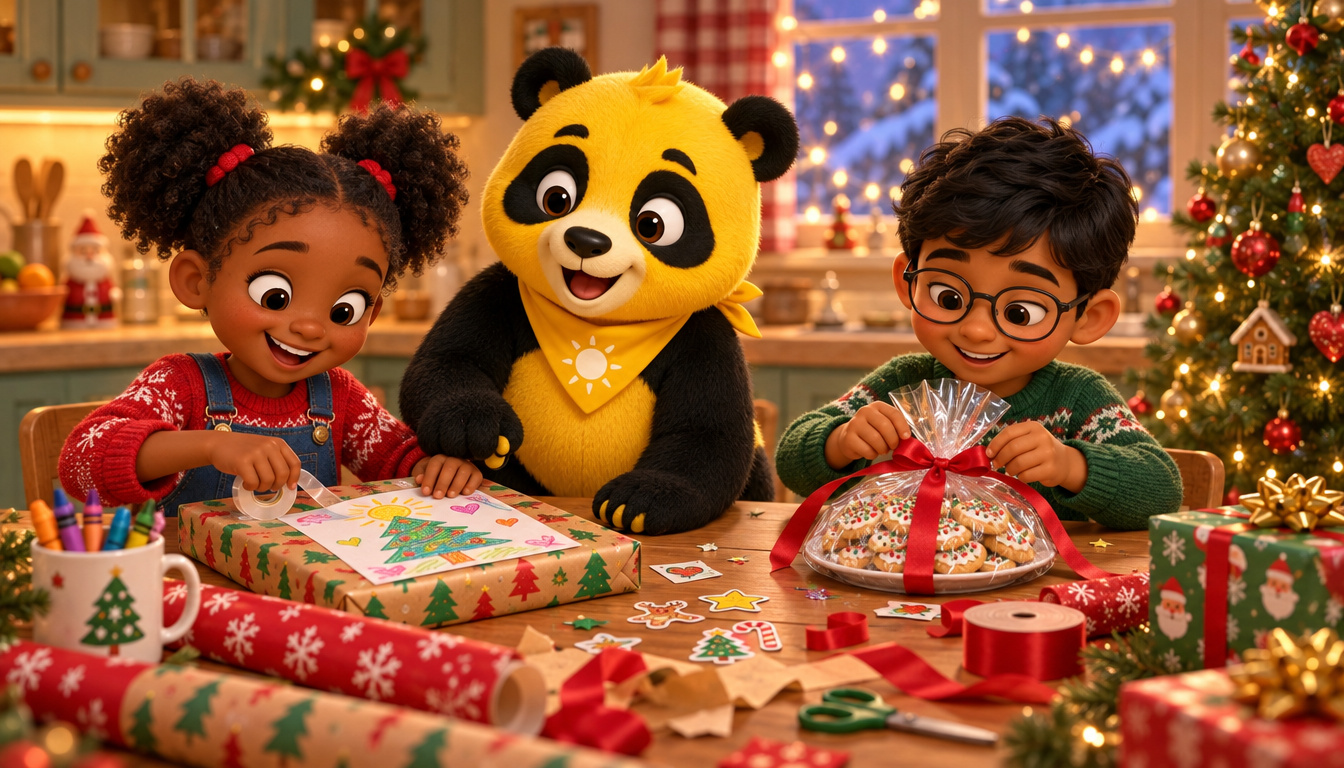
Quick takeaway: Help your child feel the joy of giving this Christmas with 8 hands-on ideas for ages 4–8, from a Giving List to handmade gifts, with words you can say.
You teach kids to give instead of only receive at Christmas by letting them do the giving themselves. Young children learn generosity through their hands, not lectures: choosing, making, wrapping and handing over a gift. Talk about why your family gives, keep it small and concrete, and let them see the smile on the other end.
It's normal for a 5-year-old to be excited about getting presents. That isn't selfishness. It's just being five. The goal isn't to make kids feel bad about wanting things. The goal is to add a second kind of joy to the season: the warm, proud feeling of making someone else happy.
Most advice on this topic is written for older kids, with budgets, volunteering shifts and big charity projects. The ideas below are sized for children ages 4–8. Each one takes 30 minutes or less, uses things you probably already have, and comes with words you can actually say.
Why Giving Has to Be Hands-On for Little Kids
Children ages 4–8 think in concrete terms. "Helping people in need" is hard to picture. "We're making cookies for Mr. Okafor next door because he lives alone" is easy to picture.
Research gathered by the Greater Good Science Center at UC Berkeley points the same way. Generous children tend to have at least one parent who deliberately talks about giving as a family value. And people give more when they connect with one real person's story than when they hear numbers. For kids, that means: name the person, say why, and let them do the giving.
Sunny Says: "Giving makes two people shine — the one who gets the gift, and the one who gives it."
1. Make a "Giving List" Before the Wish List
Time: 10 minutes. Materials: Paper, crayons, family photos (optional).
Before your child writes or draws a wish list, make a Giving List together. Ask: "Who makes our year better?" Think beyond family. Include the bus driver, a teacher, a neighbor, the librarian or a grandparent who lives far away.
Pre-readers can draw each person or glue on a photo. Keep the list to 3–5 names so it feels doable.
What to say: "Before we think about what we want, let's think about who we want to surprise."
2. Let Them Make the Gift
Time: 20–30 minutes. Materials: Whatever you have — paper, markers, salt dough, cookie mix, a jar.
A handmade gift gives a child real ownership. Easy ideas for ages 4–8:
- A drawing in a dollar-store frame
- A "coupon book" with offers like "one hug" or "I'll set the table"
- Decorated cookies on a paper plate
- A jar of hot cocoa mix with a hand-drawn label
- A salt-dough ornament with their handprint
Resist the urge to fix it. A crooked star made by your child means more than a perfect one made by you.
What to say: "Grandma is going to know you made this with your own hands. How do you think she'll feel?"
3. Shop With a Tiny Budget and a Plan
Time: 30 minutes. Materials: A few dollars per gift, the Giving List.
If you buy gifts, let your child choose one for a sibling or parent. Set a small, clear budget and go in with a plan. Before you shop, ask what that person loves. Inside the store, give two or three choices instead of the whole aisle.
This teaches a big idea in a small way: a good gift is about the other person, not about what *you* would want.
What to say: "Your brother loves dinosaurs. Which one of these do you think would make him laugh?"
4. Let Them Wrap It (Messy Is Fine)
Time: 10 minutes. Materials: Paper, tape, stickers, or a reused gift bag.
Wrapping slows the moment down and builds excitement about *giving*. Many 4-year-olds can tape and add stickers. Most 6- to 8-year-olds can fold the paper themselves with a little help.
What to say: "Shh — this is our secret until Christmas morning!"
5. Make Giving the First Part of Christmas Morning
Time: 5–10 minutes. Materials: The gifts your child made or picked.
Before anyone opens their own presents, let each child hand out the gift they chose or made, then watch it get opened. This is where the lesson clicks. Your child sees the reaction they created.
Afterward, ask about it. "How did it feel when Daddy opened your card?" Naming the feeling helps them remember it next year.
What to say: "Look at his face! You did that."
6. Do a "Make Room to Give" Toy Sort
Time: 20 minutes. Materials: A box or bag for donations.
Before new toys arrive, invite your child to choose a few toys to pass on. Keep it gentle and voluntary. Ask them to pick toys that are in good shape and that another child would enjoy.
Let your child come along to drop them off if possible. Seeing the place where the toys go makes it real.
What to say: "These toys made you really happy. Which ones are ready to make another kid happy?"
Tip: Never give away a child's toy without asking. Giving has to be their choice to build generosity.
7. Give Time, Not Just Things
Time: 15–30 minutes. Materials: None.
Some of the best gifts cost nothing. Help your child give the gift of time:
- Call or video-chat a grandparent and sing a holiday song
- Help a neighbor carry groceries or shovel a walk (with an adult)
- Draw cards for a nearby senior center through a family-friendly program
- Read a picture book to a younger sibling or cousin
Kids learn that they can make someone's day better at any age, with or without money.
What to say: "You don't need to buy anything to give. Your time is a present too."
8. Close the Loop With Thank-Yous
Time: 10 minutes. Materials: Paper and crayons.
Gratitude and giving go together. The Greater Good Science Center describes gratitude as a key link between receiving and giving. When kids notice what others did for them, they want to pass it on.
After Christmas, have your child draw a picture or dictate a short thank-you for each gift they received. Ask them to name one thing they'd like to give back to that person this year.
If a gift was a letdown, that's okay too. Our guide on what to say when your child is disappointed with a gift has simple scripts for that moment.
What to say: "Who gave you something kind this year? How can we say thank you?"
Real-Life Example: The Cookie Plate
Imagine two cousins, Maya and Rohan, ages 5 and 7. Their family picks one neighbor, Ms. Rivera, who lives alone. The kids decorate six cookies, draw a card and walk the plate over together.
Ms. Rivera opens the door and laughs out loud at the sprinkles. On the way home, Rohan says, "Can we do that for someone else tomorrow?"
That's the moment you're looking for. Not a perfect cookie. Not a speech about the true meaning of Christmas. Just a child who felt how good it is to give — and wants to do it again.
What If My Child Only Talks About Presents?
That's very normal for ages 4–8. Don't shame the excitement. Instead, add to it. Keep asking "Who are we surprising?" alongside "What's on your list?" Model it, too: "I can't wait to see Auntie's face when she opens your picture." Over a few weeks, kids start bringing up the giving side themselves.
At Sunny's Clubhouse, we believe kindness grows best when it's practiced, not preached. One small act of giving, repeated each year, becomes a family tradition kids carry for life.
This Week's Shine Challenge
Make a Giving List together tonight. Ask your child to name three people who made this year better. Pick one, and plan one small, handmade surprise for them before Christmas. Then let your child be the one to hand it over.
Questions Parents and Teachers Ask About Teaching Kids to Give at Christmas
At what age can kids understand giving?
Even toddlers enjoy helping and handing things to others. By ages 4–8, children can plan a simple gift, make it and understand that it makes someone happy. Keep it concrete: one person, one gift, one clear reason.
Should I make my child donate their toys?
Invite them, but don't force it. Ask your child to pick a few toys that are in good shape and ready for another kid. Giving builds generosity when it's the child's choice, not when toys disappear without asking.
How do I teach giving without making my child feel guilty for wanting presents?
Treat both as good. It's fine to look forward to presents. Just add a second focus: "Who are we surprising?" Celebrate their giving out loud, and avoid comparing them to "kids who have nothing."
What are easy giving activities for a classroom?
Have students make cards for a local senior center or hospital program that accepts them. Run a class "kindness cookie" project for school staff, like the custodian or cafeteria team. Or create a class Giving List of school helpers and draw thank-you pictures for each one.
How do I explain giving if we have a tight budget this year?
Tell kids the truth in simple words: "This year, we're giving gifts we make." Handmade gifts, time and kind words are real presents. A gift made together can mean more than anything bought in a store.
Get the Free Power of Kindness Pack
Want more easy ways to grow kindness at home or in class? Our free Power of Kindness Pack has printable activities and Shine Challenges for kids ages 4–8.
Further Reading
More on Kindness & Friendship
Kindness & Friendship
8 Christmas Kindness Activities for Preschoolers (Easy Ideas for Home and Class)
Eight short, low-prep Christmas kindness activities for preschool and kindergarten, each with time needed, materials and exactly what to say.
Kindness & Friendship
10 Thanksgiving Books About Gratitude for Kids (With Questions to Ask)
Ten Thanksgiving picture books about gratitude for ages 4–8, each with a question to ask after reading and a 5-minute activity to make thankfulness stick.
Kindness & Friendship
How to Make a Thankful Jar for Kids (Plus 30 Daily Prompts)
A thankful jar turns gratitude into a two-minute daily habit. Here's how to make one with kids ages 4–8, plus 30 prompts and how to read it on Thanksgiving.
Get The Sunbeam Signal
Simple ideas, playful activities, and a little Sunny inspiration for helping children shine.
For adults only. This optional newsletter is separate from free Power Pack access. Unsubscribe anytime.