Kindness & Friendship
How to Make a Thankful Jar for Kids (Plus 30 Daily Prompts)
By Audrey Bell-Kearney · · Updated
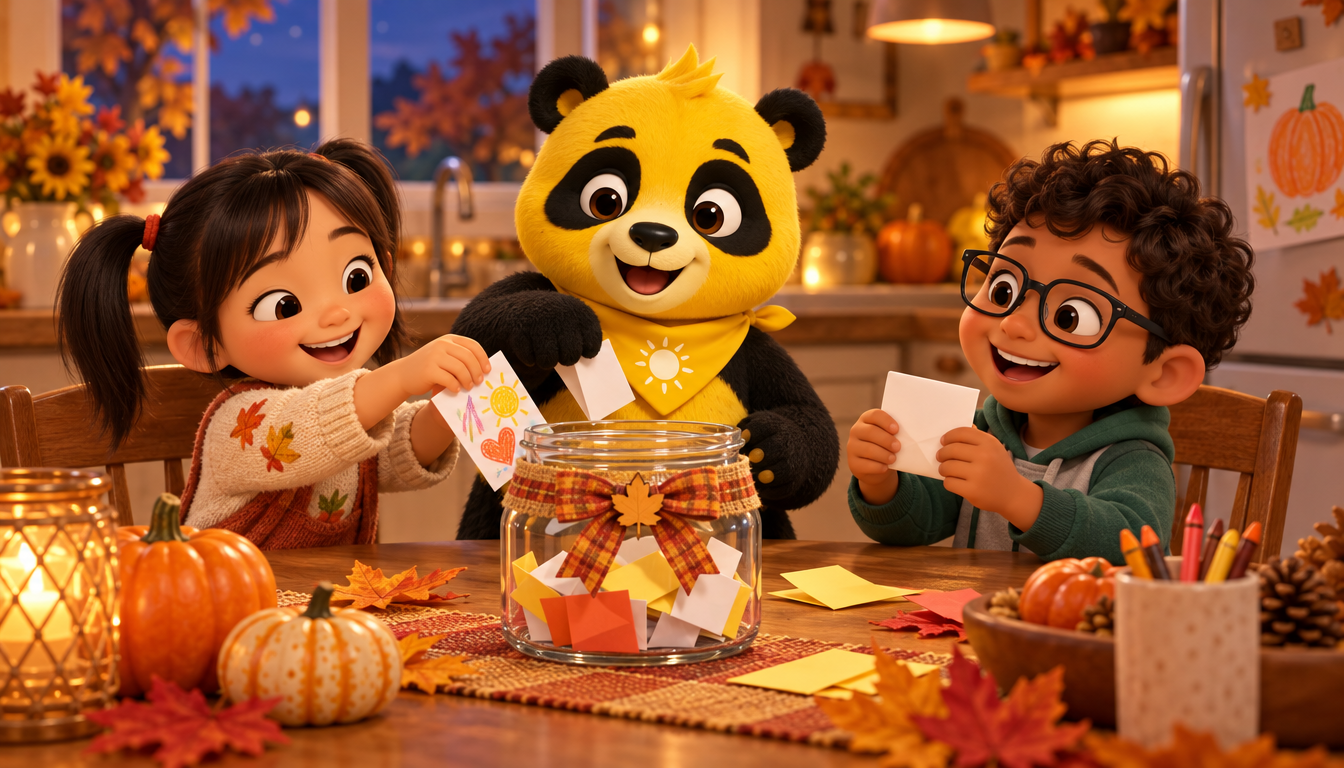
Quick takeaway: A thankful jar turns gratitude into a two-minute daily habit. Here's how to make one with kids ages 4–8, plus 30 prompts and how to read it on Thanksgiving.
A thankful jar for kids is a simple container where your family drops one small note a day about something you're grateful for. Over a few weeks, the notes pile up into a jar full of good things. Then you read them together, often at Thanksgiving dinner. Setup takes about 15 minutes, and each daily note takes about two.
The jar works because it turns gratitude from a once-a-year speech into a tiny daily habit. Children ages 4–8 can see the jar filling up, which makes something invisible feel real. A 4-year-old can draw a picture. An 8-year-old can write a full sentence about who helped and why it mattered.
At Sunny's Clubhouse, we think of the thankful jar as a "noticing machine." The more slips go in, the better kids get at spotting good things on their own.
What You Need
You probably have everything already:
- A clear jar or container. A clear jar lets kids watch it fill. A plastic jar, food container or shoebox with a slot works for little hands.
- Paper slips. Cut scrap paper into strips about 2 by 4 inches. Make a stack of 30 or more.
- Crayons, markers or pencils. Keep them right next to the jar.
- Something to decorate with. Stickers, ribbon, washi tape or a paper label with the family's name. For children under 3 in the house, skip small stickers and beads.
How to Make a Thankful Jar in 15 Minutes
Step 1: Decorate the jar together (10 minutes). Let your child choose the decorations. A jar they helped make is a jar they'll want to fill. Add a label like "The [Family Name] Thankful Jar" or "Our Good Things."
Step 2: Pick a home for it. Put it somewhere everyone passes every day, like the kitchen counter or next to the dinner table.
Step 3: Choose a daily moment. Tie it to something you already do: after dinner, after school or right before bath time. One slip per person, per day is plenty.
Step 4: Go first. Write your own slip out loud: "I'm thankful for the way Grandma called just to say hi." Kids learn gratitude by watching grown-ups practice it.
Step 5: Pick a reading day. Many families start November 1 and read the slips on Thanksgiving. You can also read a few every Sunday.
How to Adapt It for Ages 4 to 8
Children this age are at very different stages, so the same jar can look different for each child.
Ages 4–5: Let them draw. A scribbled sun, a dog or a stick-figure friend counts. Ask, "Tell me about your picture," and write their words underneath.
Ages 6–7: Invite them to write a few words or a short sentence. Inventive spelling is fine. "I am thankfl for my bik" is a perfect slip. Add one follow-up question: "Who helped make that happen?"
Age 8: Challenge them to add a "because." For example: "I'm thankful for Ms. Rivera because she helped me find my lost lunchbox." Older kids can also add a name, so slips can later become thank-you notes.
Siblings of different ages can share one jar. Just let each child use their own color of paper, so younger kids don't feel compared.
Try the "Who Helped?" Slip
This one small change makes the biggest difference. Researchers at the Greater Good Science Center suggest helping children think about the good things others do for them. That includes what the giver meant to do and what it cost the giver, like their time or effort.
So once or twice a week, make it a "Who Helped?" day. Instead of "What are you thankful for?" ask, "Who did something nice for you today?"
Maybe Mateo's coach stayed late to practice kicking with him. Maybe Aisha's big brother let her pick the show. The slip names the person and what they gave up: "Coach Dan stayed late with me. He could have gone home."
Sunny Says: "Spot the good, then thank the person behind it."
30 Thankful Jar Prompts for Kids
Kids often get stuck on "my toys" or "my tablet." That's normal. Prompts help them look in new places. Read one aloud each day or let your child pick one from a cup.
People
- Who made you smile today?
- Who helped you with something hard?
- Who is someone at school you're glad to know?
- Who keeps you safe?
- Who is a friend you love to play with?
- Which grown-up teaches you new things?
Senses and everyday things
- What was the best thing you tasted today?
- What sound do you love?
- What's something cozy you're glad you have?
- What's your favorite thing to see outside?
- What smell makes you happy?
- What's something in your room you're thankful for?
Nature and the world
- What animal are you glad lives on Earth?
- What weather do you love?
- What's your favorite thing about fall?
- What's a place you're glad you've been?
- What's something that grows that you're thankful for?
- What do you like about our neighborhood?
Yourself
- What can your body do that you're glad about?
- What's something you got better at?
- What's something kind you did today?
- What's something you're proud of?
- What's an idea you had that you liked?
- What makes you a good friend?
Harder (for ages 6–8)
- What's something hard that ended up okay?
- Who helps us that we never see?
- What's something you have that some kids might not?
- What mistake taught you something?
- Who would you like to thank but haven't yet?
- What's one thing you're thankful for that isn't a thing at all?
How to Read the Thankful Jar Together
Reading day is the payoff, so make it special without making it long.
- Take turns pulling slips. Each person pulls one and reads it aloud. Pre-readers can hand theirs to a grown-up.
- Guess who wrote it. Kids love this game, and it helps everyone notice what matters to each other.
- Ask one question per slip. "What do you remember about that day?" is enough.
- Keep it to 10 minutes. With a full jar, read 8–10 slips at dinner and save the rest for the weekend.
- Turn a few into thank-yous. Pick one or two slips that name a person. Your child can draw a picture or say thank-you to that person this week.
Afterward, tie the slips together with ribbon or tape them into a notebook.
Using a Thankful Jar in the Classroom
A class jar works well during morning meeting or the end-of-day circle.
Keep one jar and a stack of slips near the meeting rug. Choose two or three children each day to add a slip, so every child gets a turn each week. Rotate a "Jar Reader" job on Fridays, and read three slips aloud.
Try a "Thankful for Our School" week. Kids write slips about the custodian, cafeteria staff, crossing guard and school nurse. Then deliver a few slips as thank-you notes.
When It Doesn't Go as Planned
Your child says, "I'm not thankful for anything." Don't push. Go smaller: "Was there one thing today that was a little bit good?" Or let them skip a day. Forced thanks rarely feels real to kids.
Every slip says "toys." That's okay at first. Use a prompt from the list above, or ask, "Who gave you that toy?" Now the slip is about a person.
You forget for a week. Just start again. A half-full jar still holds plenty of good things to read.
It's been a hard season for your family. Keep the slips small and simple: a warm bath, a good song, each other. Gratitude doesn't mean pretending everything is fine.
This Week's Shine Challenge
Make your thankful jar together this week. Then try one "Who Helped?" day. At dinner, each person names one person who helped them today, and what that person did. Write it down and drop it in the jar.
Questions Parents and Teachers Ask About Thankful Jars
When should we start a thankful jar for Thanksgiving?
Many families start on November 1, which gives you about three to four weeks of slips by Thanksgiving. If you start later, that's fine. Even one week of slips makes a sweet Thanksgiving reading.
What's the difference between a thankful jar and a gratitude jar?
They're the same idea with different names. "Thankful jar" is popular around Thanksgiving, while "gratitude jar" is often used for year-round practice. Many families keep theirs going after the holiday and read it on New Year's Day.
What if my child can't write yet?
Let them draw, then write their words under the picture as they tell you about it. You can also take a photo of something they're thankful for, print it and drop it in. The habit of noticing matters more than the writing.
How do I keep my child interested after the first week?
Use daily prompts, let your child pick the colored paper, and peek at the jar together to see how full it's getting. A "Who Helped?" day once a week adds variety. Keep it short so it stays fun.
Can a thankful jar work for a whole class?
Yes. Use one shared jar, give a few children a turn each day, and read slips aloud on Fridays. It's a calm, simple way to build community, and it gives quieter kids a way to share.
Get the Free Power of Kindness Pack
Gratitude and kindness grow together. Our free Power of Kindness pack for grown-ups includes a Sunny story and simple activities you can use alongside your thankful jar at home or in the classroom.
Further Reading
More on Kindness & Friendship
Kindness & Friendship
10 Easy Ways to Teach Kids Gratitude This Thanksgiving
Teach gratitude this Thanksgiving with 10 easy, hands-on activities for kids ages 4–8, from a Thankful Jar to bedtime whispers.
Kindness & Friendship
How to Teach Kindness to Children Ages 4–8: 5 Simple Ways
Kindness starts with small, specific actions. Try these five simple ways to help children notice others, offer help, and respect someone’s answer.
Get The Sunbeam Signal
Simple ideas, playful activities, and a little Sunny inspiration for helping children shine.
For adults only. This optional newsletter is separate from free Power Pack access. Unsubscribe anytime.