Kindness & Friendship
How to Teach Kindness to Children Ages 4–8: 5 Simple Ways
By Audrey Bell-Kearney ·
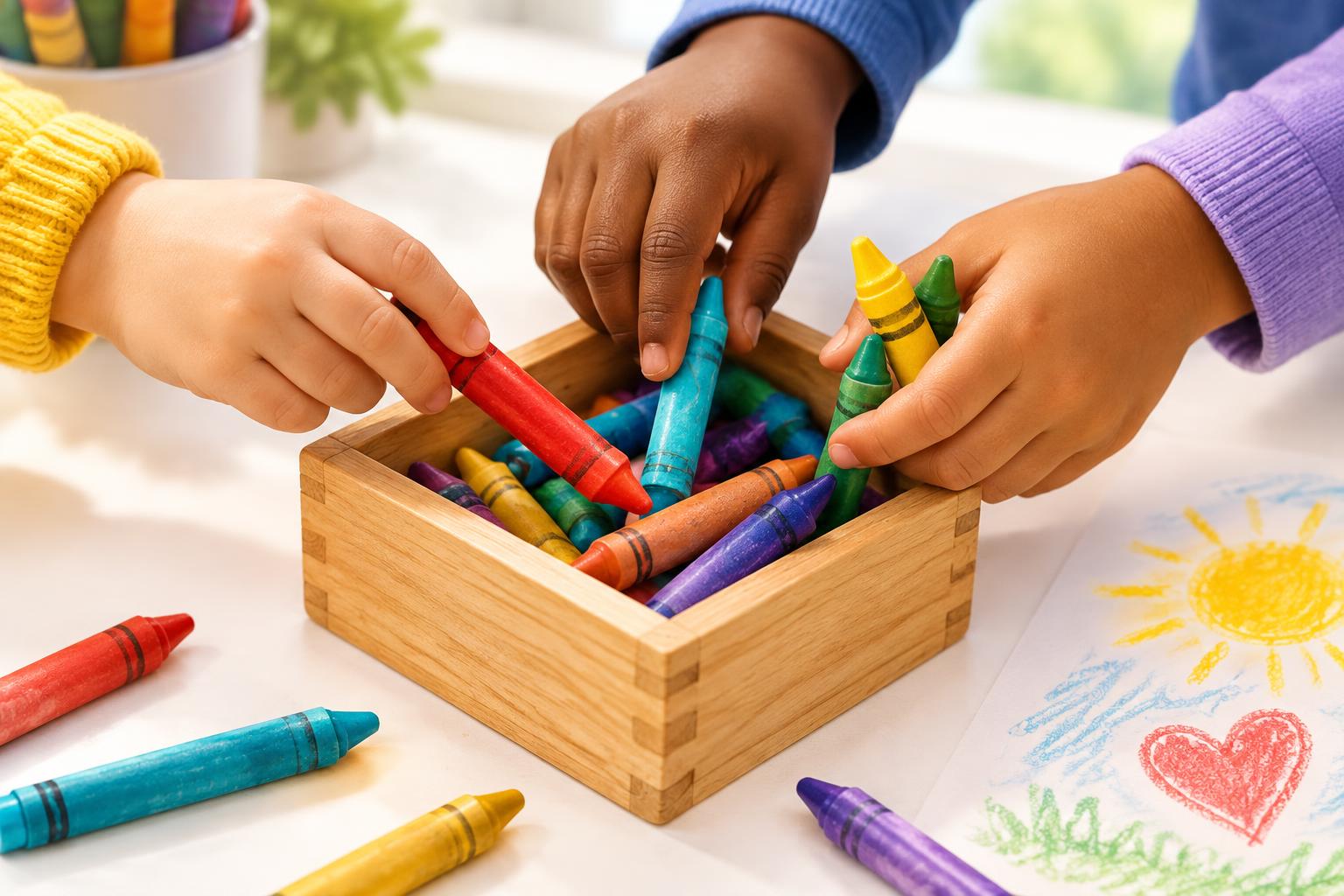
Quick takeaway: Kindness starts with small, specific actions. Try these five simple ways to help children notice others, offer help, and respect someone’s answer.
To teach kindness to children ages 4–8, show them specific helpful actions, give them words to use, practice through play, and notice their efforts. Start with three simple steps: notice what is happening, ask whether help is wanted, and listen to the answer.
“Be nice” is a familiar instruction. But when a child is holding a favorite toy, watching a classmate struggle, or feeling frustrated, those two words may not explain what to do next.
At Sunny’s Clubhouse, we make kindness something children can practice in ordinary moments. You don’t need a perfect lesson or a long list of supplies. A crayon box, a short conversation, and a little time together can give you a place to begin.
What Does Kindness Look Like for Young Children?
Kindness can look like asking before helping, making space at the table, taking turns, or checking whether someone wants company. It can also mean respecting another person’s “no.”
The American Academy of Pediatrics’ HealthyChildren.org encourages adults to model kindness themselves. Children can see thoughtful words and actions during your everyday interactions—not only when you’re giving a lesson.
Try letting a child hear you say, “Would you like help carrying that?” Then show what listening looks like, whether the answer is yes or no.
1. Replace “Be Nice” With One Clear Action
Give a child something they can actually try.
Instead of “Be nice to your brother,” try “Ask if he wants help finding his crayon.”
Instead of “Share everything,” try “Tell her when you’ll be finished, so she knows when her turn can start.”
Instead of “Go make that child happy,” try “You can ask if they want someone to sit beside them.”
These invitations keep the task small. Children are practicing a helpful action, not taking responsibility for someone else’s feelings.
2. Teach Three Kindness Phrases
Practice these words when everyone is calm:
- “Would you like some help?”
- “What would help you?”
- “Okay, I’ll listen.”
For a younger child, model the phrase and offer a simple choice: “Should we bring the box or ask first?” A child who prefers pointing, drawing, or gestures can participate that way too.
At home, practice with toys or pretend situations. In a classroom, demonstrate with another adult or a willing participant rather than putting a student’s real difficulty on display.
3. Play a 10-Minute Kindness Detective Game
Supplies: optional paper and crayons.
First two minutes: Say, “We’re kindness detectives. We notice little opportunities to help.” Pretend a crayon rolls under a chair.
Next three minutes: Ask, “What do you notice?” Then model, “Would you like help?” Let the child suggest a helpful action.
Next three minutes: Switch roles. You offer help, and the child practices saying yes, no, or asking for something different. Reply, “Okay, thanks for telling me.”
Last two minutes: Choose one small kindness action to try during the day.
Parents can play together during cleanup. Teachers can demonstrate the same game during a short classroom meeting. Nothing needs to be spilled, and no worksheet is required.
4. Try One Small Kindness Mission
Invite the child to notice one opportunity, ask whether help is welcome, and respond to the answer.
At home, that might be offering to bring someone a book. At school, it might be asking whether a classmate wants help putting blocks away.
Keep the mission in familiar, supervised settings. If the other person declines, say, “You asked, and you listened. That matters.”
The goal is practice. A child doesn’t need a big gesture, an enthusiastic thank-you, or a successful invitation every time.
5. Name the Effort You Noticed
Make your encouragement specific:
“You noticed I was carrying several books and asked if I wanted help.”
“Your friend wanted to finish alone, and you respected that.”
“You waited until your turn and told someone what you needed.”
You can jot down a moment to remember later. Keep it as an observation, not a score or comparison with another child.
How Sunny’s S.H.I.N.E. Method Connects the Steps
Sunny’s S.H.I.N.E. Method gives grown-ups a repeatable way to explore one skill:
- SEE IT: introduce kindness through a story or example.
- HEAR IT: invite the child’s ideas.
- IMAGINE IT: practice with a playful situation.
- NOW DO IT: try one small real-world action.
- ENCOURAGE IT: notice the effort.
Use the steps in one short session or across several days. You can come back to the same phrase or activity whenever it’s useful.
Questions Parents and Teachers Ask About Teaching Kindness
How do I explain kindness to a four-year-old?
Say, “Kindness means thinking about someone else and choosing a thoughtful action.” Then demonstrate something small, such as asking before helping with crayons.
What if my child doesn’t want to share?
Help the child communicate a boundary and make a plan for turns. Try, “I’m using this now. You can have a turn when I finish.” Kindness doesn’t require immediately surrendering every possession.
What if a child doesn’t want to join the activity?
Offer watching, pointing, drawing, or trying later. You can model the activity without demanding participation.
How can teachers fit kindness practice into the school day?
Use an existing moment: cleanup, a story discussion, or a short class meeting. Practice one phrase and notice opportunities to use it rather than adding another long lesson.
Try the Free Power of Kindness Pack
Ready to put these ideas into practice? Visit Sunny’s Power Station and activate the free Power of Kindness pack. It brings together a Sunny story, three conversation questions, a 10-minute activity, and a simple mission for home or the classroom.
Choose Parent/Caregiver or Teacher/Educator, then enter your adult email to activate your pack.
For more simple ideas, subscribe to The Sunbeam Signal, our newsletter for grown-ups helping children shine.
Further Reading
Get The Sunbeam Signal
Simple ideas, playful activities, and a little Sunny inspiration for helping children shine.
For adults only. This optional newsletter is separate from free Power Pack access. Unsubscribe anytime.