Kindness & Friendship
8 Christmas Kindness Activities for Preschoolers (Easy Ideas for Home and Class)
By Audrey Bell-Kearney · · Updated
Quick takeaway: Eight short, low-prep Christmas kindness activities for preschool and kindergarten, each with time needed, materials and exactly what to say.
The best Christmas kindness activities for preschoolers are short, hands-on and done together. Think five to fifteen minutes, one clear action, and a grown-up who names the kindness out loud. A paper chain countdown, a compliment circle or a secret helper mission will teach more than a long talk about "being nice."
Preschoolers and kindergartners are ready to be kind. They just need kindness to be something they can see, touch and do. "Be good for Santa" is too fuzzy. "Hand Grandma her slippers" is something a four-year-old can do right now.
The ideas below work at home or in a classroom. Most use things you already have: paper, tape, crayons and a little time. None of them depend on buying anything, and none of them repeat a gift-making project. If you want ideas for giving presents, see our guide to teaching kids to give at Christmas in Further Reading.
Why Small and Simple Works Best
Young children learn kindness by watching and doing. The Greater Good Science Center at UC Berkeley points out that kindness can be "contagious": kids help more when they see the adults around them helping.
It also shares a surprising finding. In one study, toddlers who got material rewards for helping later helped *less* than toddlers who got only praise or nothing at all. So skip the sticker chart for kindness. A smile and "You noticed your friend needed help" is the reward.
That is why each activity below ends with words to say, not a prize.
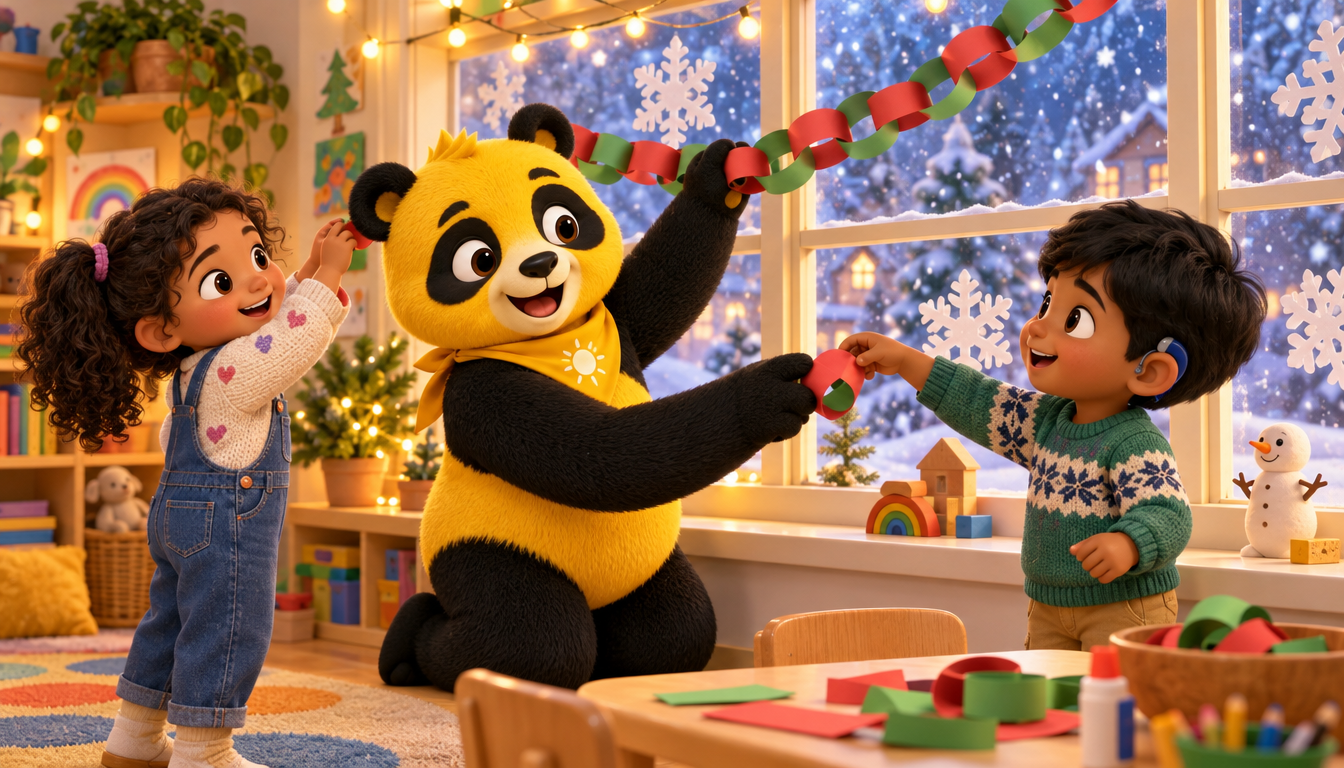
1. The Kindness Countdown Chain
Time: 15 minutes to make, 2 minutes a day. Materials: Strips of green and red paper, tape or glue, a marker.
Make one paper loop for each day until Christmas or winter break. On each strip, write or draw one small kind act. Pre-readers do best with a simple picture next to the words. Ideas: "Hold the door," "Help set the table," "Give a high five to someone new," "Draw a picture for a neighbor."
Each morning, your child tears off one loop and does that act before bedtime. Keep every act doable in under five minutes.
What to say: "Let's see what kindness we get to do today!"
2. The Shine Bell Kindness Catch
Time: All day, a few seconds each time. Materials: One jingle bell (or a bell on a ribbon).
Put the bell somewhere everyone can reach. Whenever anyone in the house or class catches someone being kind, they ring the bell and say what they saw. "Ding! Mateo helped Lily zip her coat!"
Grown-ups go first, and grown-ups get caught too. This turns kindness into something children *notice*, which is the first step to doing it.
What to say: "I heard the bell! Who was kind? What did they do?"
3. Snowflake Compliment Circle
Time: 10 minutes. Materials: One paper snowflake (cut or printed).
Sit in a circle. Pass the snowflake around. Whoever holds it says one kind thing about the person on their left. Then they pass it on.
Model specific compliments first: "Aaliyah, you always share the blue crayon." Specific words teach children what kindness looks like. If a child freezes, offer two choices: "Do you like how Sam builds, or how Sam laughs?"
What to say: "Every snowflake is different, and so is every friend. What's special about yours?"
4. Thank-You Cards for Helpers
Time: 15 minutes. Materials: Folded paper, crayons, stickers.
Make a short list of people who help your child every week. Think mail carrier, bus driver, school custodian, crossing guard, librarian or the cafeteria staff. Let your child choose one or two.
Children draw a picture and you write their words on the card. Then deliver it together. Watching a helper smile is a big moment for a four-year-old.
What to say: "Who helps us that we don't always thank? Let's surprise them."
5. The Kindness Cocoa Café
Time: 15–20 minutes. Materials: Toy cups, a pot or bowl, napkins, a pretend menu.
Set up a pretend café. Children take turns being the server and the guest. The server asks, "What would you like?" and pours pretend cocoa. The guest says "Thank you." Then they switch.
Pretend play is how preschoolers practice social skills. In the café, they rehearse taking turns, listening, serving someone else and saying please and thank you, all while playing.
What to say: "How can you make your guest feel welcome?"
6. Secret Elf Helper Missions
Time: 5 minutes. Materials: None.
Whisper a secret mission to your child: "Can you line up everyone's boots by the door without anyone seeing?" Other missions: put a book on a sibling's pillow, tidy one shelf, or set out napkins before dinner.
Then wait for someone to notice. Quiet kindness teaches children that helping feels good even without applause. In a classroom, a teacher can give one child each day a "secret elf" job.
What to say (later, privately): "You did that without anyone asking. How did it feel?"
7. How Does Everyone Feel? Ornament Check-In
Time: 5 minutes a day. Materials: Paper circle "ornaments" with simple faces (happy, sad, tired, excited, worried).
The holidays are busy, and feelings run high. Hang the face ornaments on the tree or a wall. Ask your child to choose the one that matches how *they* feel. Then ask how someone else might feel: a tired baby brother, a grandparent far away, a friend who is sick.
Kindness starts with noticing feelings. This tiny habit helps children ask, "What does this person need?"
What to say: "Grandpa looks tired. What could we do to help him feel better?"
8. Winter Treats for the Birds
Time: 20 minutes. Materials: Pinecones, string, a spread, birdseed.
Kindness includes animals. Tie string to a pinecone, cover it with a spread, then roll it in birdseed. Hang it near a window and watch who visits.
Use a nut-free spread if anyone in your home or class has a nut allergy. Grown-ups handle the string-tying for the youngest kids.
What to say: "It's cold outside. The birds will be glad we thought of them."
Sunny Says: "Small Hands Can Do Big Kindness"
At Sunny's Clubhouse, we love this line because it reminds children that kindness isn't only for grown-ups. You can say it after any activity above. Or use it when your child feels too little to help.
Sunny the Panda learns the same thing in our kindness stories: one small action, like asking "Wanna play?", can change someone's whole day. Children remember the phrase more when you say it the same way each time.
Tips for Making It Stick
- Pick three, not eight. A few repeated activities beat a packed calendar.
- Go first. Children copy what you do more than what you say.
- Praise the action, not the child's goodness. "You held the door for Mrs. Patel" works better than "You're so good."
- Keep it joyful. If a child is tired or cranky, skip that day. Kindness should never feel like a punishment.
This Week's Shine Challenge
Hang a jingle bell somewhere central and start the Shine Bell Kindness Catch tonight. Each person in your family or class tries to "catch" at least one act of kindness before bedtime. At dinner or closing circle, ring the bell once for every kindness someone noticed.
Questions Parents and Teachers Ask About Christmas Kindness Activities
What are easy Christmas kindness activities for 3- and 4-year-olds?
Choose activities with one step and a quick result. A compliment circle, a secret helper mission or a pretend cocoa café all work well. Keep them under 15 minutes and do them alongside your child.
Should I reward my child for being kind?
Skip prizes and stickers for kindness. Research shared by the Greater Good Science Center found that toddlers given material rewards for helping later helped less. Warm, specific words like "You noticed she was sad" work better.
How can teachers do Christmas kindness activities in a diverse classroom?
Frame them as winter or holiday kindness so every family feels included. A kindness chain, compliment circle or thank-you cards for school helpers work for all children. Invite families to share their own winter traditions of helping.
My child doesn't want to join in. What should I do?
That's normal, especially when children are tired or shy. Let them watch first, then offer a small role, like ringing the bell or handing out paper. Never force a compliment or an apology; invite it again tomorrow.
How many kindness activities should we do before Christmas?
One small act a day is plenty. A countdown chain gives you that rhythm without extra planning. It's better to do a few things often than many things once.
Get the Free Power of Kindness Pack
Want more ready-to-use kindness ideas for home or the classroom? Our free pack includes simple activities and Sunny's kindness phrases for ages 4–8.
Further Reading
More on Kindness & Friendship
Kindness & Friendship
How to Teach Kids to Give Instead of Receive at Christmas: 8 Simple Ways
Help your child feel the joy of giving this Christmas with 8 hands-on ideas for ages 4–8, from a Giving List to handmade gifts, with words you can say.
Kindness & Friendship
10 Thanksgiving Books About Gratitude for Kids (With Questions to Ask)
Ten Thanksgiving picture books about gratitude for ages 4–8, each with a question to ask after reading and a 5-minute activity to make thankfulness stick.
Kindness & Friendship
How to Make a Thankful Jar for Kids (Plus 30 Daily Prompts)
A thankful jar turns gratitude into a two-minute daily habit. Here's how to make one with kids ages 4–8, plus 30 prompts and how to read it on Thanksgiving.
Get The Sunbeam Signal
Simple ideas, playful activities, and a little Sunny inspiration for helping children shine.
For adults only. This optional newsletter is separate from free Power Pack access. Unsubscribe anytime.