Kindness & Friendship
10 Easy Ways to Teach Kids Gratitude This Thanksgiving
By Audrey Bell-Kearney ·
Quick takeaway: Teach gratitude this Thanksgiving with 10 easy, hands-on activities for kids ages 4–8, from a Thankful Jar to bedtime whispers.
The easiest way to teach kids gratitude at Thanksgiving is to make it a small daily habit, not a speech at the table. Children ages 4–8 learn thankfulness by noticing good things, naming who helped, and doing something to say thanks. The 10 ideas below take 5 to 15 minutes each and need little more than paper, a jar and your dinner table.
When I was a kid growing up in New Jersey, Thanksgiving was one of the best holidays in my house. My mom loved to cook for Thanksgiving inviting people over and I loved them coming over, because for me that meant game time where my family gathered to play spades. My mom always wanted to make sure that she could help bring a good Thanksgiving to at least one other family. As I got older I realized, that my brother and I are the same way and that I’ve taught my daughter who is now teaching my 7-year-old granddaughter Carter the same thing.
Why "Say Thank You" Isn't Enough
Most of us teach manners first: "What do you say?" That's a good start, but polite words and real gratitude are different. Researchers at the University of North Carolina at Chapel Hill describe gratitude as four steps: Notice, Think, Feel and Do. A child notices something good, thinks about who made it happen, feels glad about it, and does something to show thanks.
Young children usually start with the noticing and the doing. That's why every idea below gives kids something to look for or something to do with their hands.
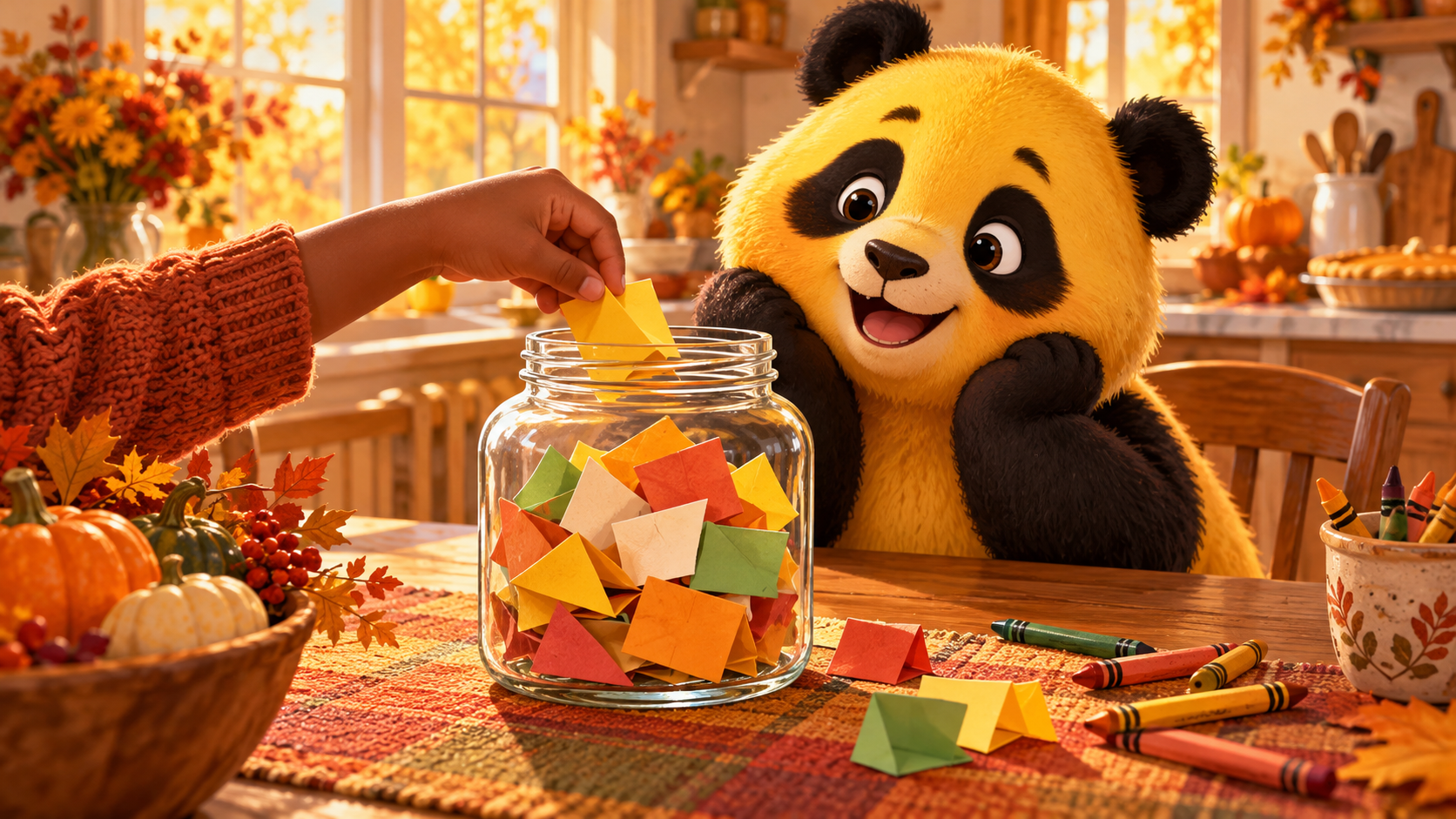
1. Start a Thankful Jar
Put a clear jar on the kitchen counter on November 1. Each day, everyone adds one slip of paper naming something they're thankful for. Children who can't write yet can draw a picture or tell you what to write.
On Thanksgiving, pass the jar around the table and read the slips aloud. Kids love hearing their own words read back, and grown-ups often hear things they never knew a child noticed.
2. Play "Three Thanks" at Dinner
Before anyone eats, each person shares three things:
- One thing they're thankful for.
- One person they're thankful for.
- One thing they're thankful for about themselves.
The third one matters. Being thankful for your own strong legs, kind heart or good ideas builds confidence alongside gratitude.
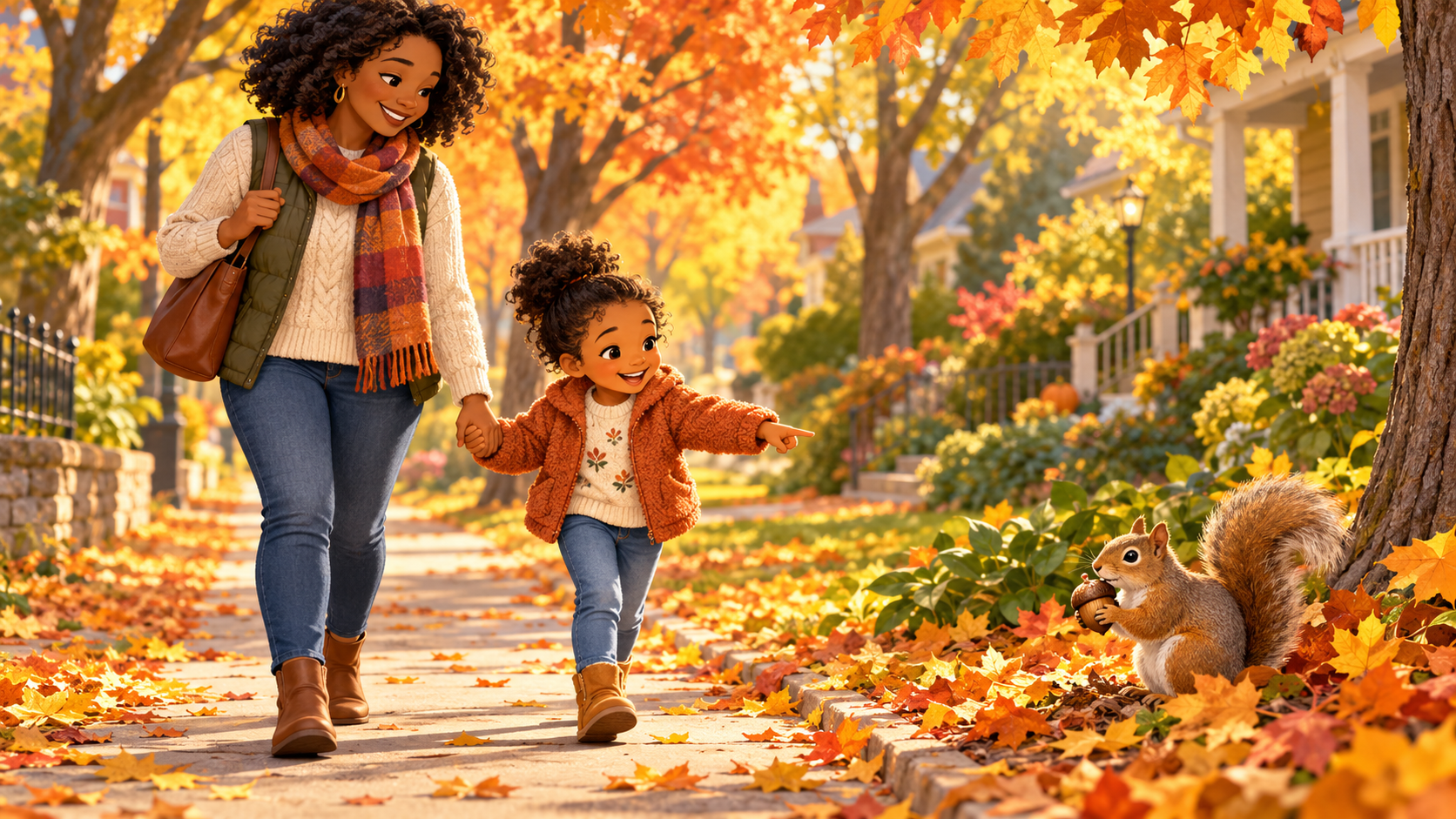
3. Take a Thankful Walk
Go outside for 10 minutes with one mission: find five things to be thankful for. Crunchy leaves, a friendly neighbor, a warm coat, a squirrel with a big acorn. Let your child lead and keep count on their fingers.
This turns gratitude into a game of noticing, which is exactly where young children start.
4. Ask "Who Helped Make That Happen?"
This is the Think step, and it's easy to add to everyday moments. When your child enjoys something, ask who helped make it possible.
Take the pumpkin pie. A farmer grew the pumpkins. A truck driver brought them to the store. A cashier rang them up. Someone in the family baked it. Suddenly one slice of pie has five people to thank.
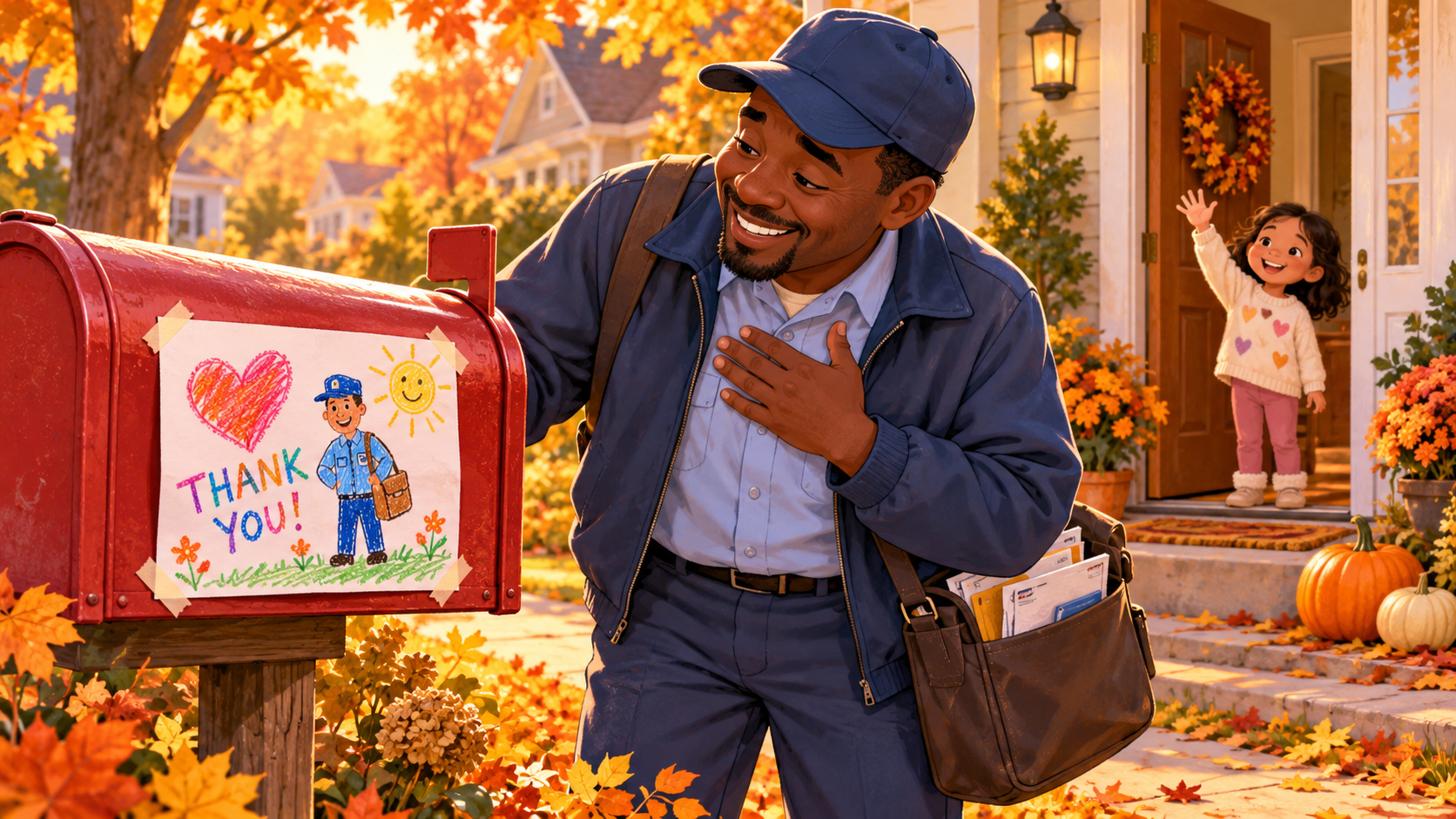
5. Draw Thank-You Pictures for Helpers
Make a list together of people who help your family: the mail carrier, the bus driver, a teacher, the school custodian, a nurse, a coach. Your child draws a thank-you picture for one or two of them.
Tape one to the mailbox for your mail carrier, or hand one to a teacher before the Thanksgiving break. Seeing a grown-up smile at their drawing teaches kids that a thank-you can make someone's whole day.
6. Make Thankful Place Cards
Give your child a place card for each Thanksgiving guest. On the back, they draw or write one thing they like about that person: "Aunt Dee tells the best stories." "Grandpa always saves me a seat."
Guests find their card at dinner, and your child gets to watch what a few kind words can do.
7. Give Something Before the Feast
Gratitude grows when kids see that not everyone has the same. Before Thanksgiving, let your child pick three cans or boxes from the pantry for a local food drive, and let them carry the bag in themselves.
Keep the talk simple: "We have enough to share, so we're sharing." This is the Do step in action.
8. Teach "Thank You, Because"
In the UNC gratitude research, a 6-year-old described someone's thank-you this way: she said it, but she didn't mean it. Kids can tell the difference, and so can everyone else.
Help your child add one reason to every thank-you: "Thank you for the crayons, because now I can draw my rainbow." The word "because" turns a polite habit into real thanks.
9. Read a Gratitude Story Together
Pick a picture book about being thankful and read it together the week of Thanksgiving. Afterward, ask: "What was the character thankful for? Who helped them?" Stories give kids words for feelings they can't name yet.
10. End the Day With a Thankful Whisper
At bedtime, lean in and whisper one good thing from your day. Then let your child whisper one back. It takes 30 seconds, it calms busy minds, and it ends the day on something good.
This Week's Shine Challenge
Pick just one idea from this list and try it every day until Thanksgiving. Most families start with the Thankful Jar or Three Thanks because they fit into a routine you already have.
Questions Parents and Teachers Ask About Teaching Gratitude
At what age do kids understand gratitude?
Children as young as 2 or 3 can learn to say "thank you" as a habit. Between ages 4 and 8, most children begin to understand that someone chose to do something kind for them, and that's where real gratitude starts. Keep practices short and hands-on at this age.
What if my child says they aren't thankful for anything?
That's common, especially when a child is tired or upset. Don't push. Make it smaller: "Is there one thing that made you smile today?" You can also go first and share yours. Kids learn gratitude by watching grown-ups practice it.
How do I teach gratitude without it feeling forced?
Make it a game or a routine, not a lecture. Thankful walks, a jar on the counter and bedtime whispers feel like fun, not homework. Skip guilt-based lines like "other kids have nothing." Focus on noticing good things and the people behind them.
What are easy Thanksgiving gratitude activities for kindergarten?
Thankful Jars, thank-you drawings for school helpers, a class Three Thanks circle and a thankful walk around the playground all work well for kindergarten. Each takes 5 to 15 minutes and needs only paper, crayons and a jar.
Get the Free Power of Kindness Pack
Gratitude and kindness grow together. Our free Power of Kindness pack for grown-ups includes a Sunny story and simple activities you can use at home or in the classroom this holiday season.
Further Reading
Sources
How to practice gratitude? Notice. Think. Feel. Do., Andrea Hussong, University of North Carolina at Chapel Hill, November 24, 2020. Source for the Notice-Think-Feel-Do steps and the 6-year-old’s comment in way 8.
More on Kindness & Friendship
Kindness & Friendship
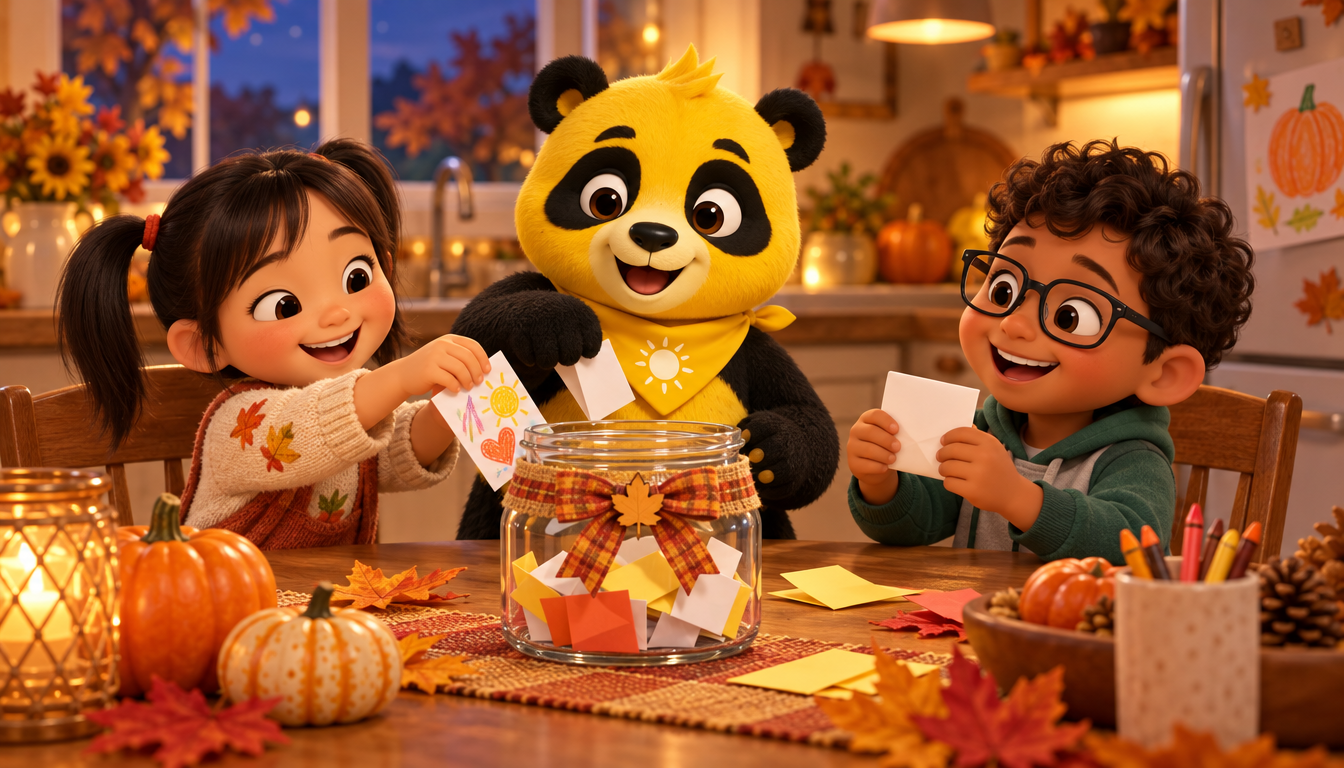
How to Make a Thankful Jar for Kids (Plus 30 Daily Prompts)
A thankful jar turns gratitude into a two-minute daily habit. Here's how to make one with kids ages 4–8, plus 30 prompts and how to read it on Thanksgiving.
Kindness & Friendship
How to Teach Kindness to Children Ages 4–8: 5 Simple Ways
Kindness starts with small, specific actions. Try these five simple ways to help children notice others, offer help, and respect someone’s answer.
Get The Sunbeam Signal
Simple ideas, playful activities, and a little Sunny inspiration for helping children shine.
For adults only. This optional newsletter is separate from free Power Pack access. Unsubscribe anytime.