Big Feelings
What to Say When Your Child Is Disappointed With a Gift (Scripts for Ages 4–8)
By Audrey Bell-Kearney · · Updated
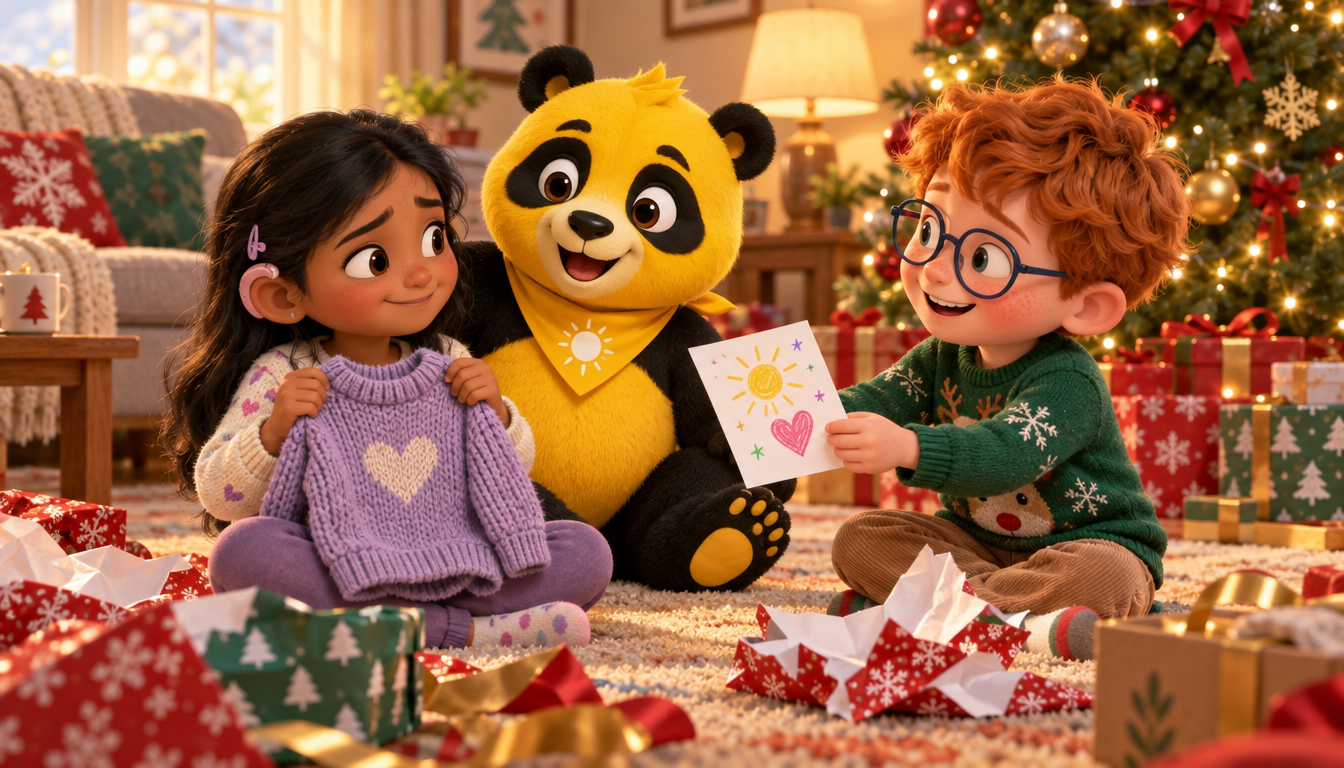
Quick takeaway: Simple, calm scripts for the moment a gift misses the mark, plus what to say before gift time, how to talk to relatives and a 10-minute practice game.
When your child is disappointed with a gift, start by naming the feeling, not fixing it: "You hoped for something different. That's a disappointed feeling." Stay close and calm, and save the lesson about thank-yous for later. A child can feel disappointed and grateful at the same time, and your job in the moment is to help them hold both.
That "meh" face over a sweater from Grandma is not a sign you raised an ungrateful kid. Children ages 4–8 are still building the skills to manage a big letdown, especially on an exciting, sugary, overstimulating holiday morning. The good news? A disappointing gift is one of the gentlest ways to practice those skills.
Below you'll find what to say before, during and after gift time, plus the words to use with relatives and a simple practice game to try this week.
Why Kids Get So Disappointed by Gifts
Young children often build a picture in their minds of the "perfect" present. When the box holds something else, the gap between hope and reality hits hard. They don't yet have the brakes that adults use to hide a feeling politely.
Add a late night, a crowded room and a pile of wrapping paper, and even a usually polite child can blurt out, "I already have this!" That moment is about feelings and development, not character. Treat it as a teaching moment, not a crisis.
What to Say in the Moment
These short scripts work for ages 4–8. Keep your voice low and your words few.
1. Name the feeling
Say: "You were hoping for something else. You feel disappointed."
Naming a feeling helps a child feel understood, and it gives them a word to use next time. Don't argue them out of it ("But it's a great gift!"). That usually makes the feeling bigger.
2. Hold both feelings at once
Say: "You can feel disappointed *and* still be thankful that Aunt Rosa thought of you."
This is the heart of it. Kids don't have to choose between being honest and being kind. They can be both.
3. Give a quiet exit
Say: "Let's take a quick break in the kitchen together."
If tears or loud words start, step away for a minute. A quick break protects your child's dignity and the giver's feelings. Take a few slow breaths together before going back.
4. Offer a simple "thank you" line, not a forced speech
Say (quietly to your child): "You can say, 'Thank you for thinking of me.'"
Every word of that line is true, even if the gift misses the mark. It's much easier for a child to say than "I love it!", which they may not feel.
5. Talk it through later
Say (once calm): "That was a tricky moment. What could you say next time?"
Most learning happens after the storm, not during it. A two-minute chat at bedtime is plenty.
What to Say Before Gift Time
A little preparation goes a long way. Try these the day before or that morning.
- Set expectations with "might." "You *might* get something on your list. You *might* get a surprise." This keeps hopes realistic without crushing excitement. Writing for PBS KIDS for Parents, therapist Katie Hurley puts it simply: "the word 'might' is very important."
- Explain what a gift really means. "When someone gives you a present, it means they were thinking about you."
- Practice the thank-you line. Rehearse "Thank you for thinking of me" a few times. Make it silly, then make it real.
- Plan the day. "After breakfast, we'll open gifts. Then we'll play outside." Gifts go better with fed, rested kids and a clear plan.
The Gift Surprise Game (Practice in 10 Minutes)
This is our favorite way to practice at Sunny's Clubhouse, because kids learn best through play.
Time needed: 10 minutes Materials: a few small household items (a spoon, a sock, a rock, a crayon), some paper bags or old wrapping paper
How to do it today:
- Wrap or bag 4–5 ordinary objects. Mix in one fun item, like a sticker or a favorite snack.
- Take turns "opening gifts." Each person must respond with a kind line, even for the sock.
- Ham it up! A grown-up can model a big gasp: "A spoon! Thank you for thinking of me!"
- Then switch roles. Let your child be the gift-giver and watch your reaction.
- End by asking, "How did it feel when someone said thank you for your gift?"
This game works at home or in a classroom circle. Kids laugh, and they also rehearse the exact words they'll need on the big day. Children like Mateo, Priya or Jaylen might act out a grumpy face first, then try the kind response. Both are welcome.
Sunny Says: "Thank You for Thinking of Me"
Sunny Says: "A gift is a hug you can unwrap. Say thank you for the hug!"
Sunny the Panda loves surprises, but even Sunny has opened a present that wasn't what he hoped for. His trick is to look past the box and think about the person who picked it. Share this Sunny Says with your child before gift time. Little ones often remember a character's words more easily than ours.
How to Talk to Grandparents and Relatives
Sometimes the grown-up who gave the gift feels hurt. A few calm words can smooth things over.
- Speak for your child gently. "She's still learning how to handle big surprises. We really appreciate how thoughtful you are."
- Avoid shaming in front of others. A public scolding teaches embarrassment, not gratitude.
- Follow up with a thank-you. A drawing, a short video or a dictated note sent later shows real appreciation, once feelings have settled.
Most relatives soften quickly when they hear you value their kindness.
What Comes After: Thank-You Notes and Returns
Thank-you notes are a wonderful way to practice gratitude after the excitement fades. For ages 4–5, let your child draw a picture and you write one line. For ages 6–8, try this simple fill-in: "Dear ___, Thank you for the ___. I will use it to ___. Love, ___."
What about returns or exchanges? That's a family choice. If you do exchange a gift, you can still thank the giver for thinking of your child. The thank-you is for the thought, not the item.
If your child seems disappointed often, or the feelings are very intense and hard to calm, talk with your pediatrician. They can help you sort out what's typical and what might need more support.
This Week's Shine Challenge
Play the Gift Surprise Game once this week. Wrap three silly household objects, take turns opening them, and practice saying, "Thank you for thinking of me!" Bonus: let your child wrap a "gift" for you, and show them how it feels to receive a kind response.
Questions Parents and Teachers Ask About Gift Disappointment
Is it normal for a 5-year-old to be upset about a gift?
Yes. Young children are still learning to manage big feelings and expectations. A disappointed reaction is a normal part of development, not a sign your child is ungrateful. With practice, most kids get better at it over time.
Should I make my child say "I love it" to be polite?
It's better not to. Asking a child to say something untrue can feel confusing. Teach an honest, kind line instead, like "Thank you for thinking of me." It's polite and true at the same time.
What if my child says something rude in front of the giver?
Stay calm and keep it short. Say, "She's still learning," then step away with your child for a quiet break. Talk about better words later, and help your child make a simple repair, like a drawing or a thank-you call.
How can I help my child when a sibling or cousin gets a "better" gift?
Name the feeling first: "It's hard when someone gets something you wanted." Then gently shift focus to what your child can enjoy or share. Avoid comparing gifts out loud, and plan a shared activity so the day isn't only about presents.
How do teachers handle disappointment during a class gift swap?
Practice the Gift Surprise Game before the swap so students know the expected response. Keep gift guidelines clear for families, like a set price or theme. Afterward, invite each child to share one thing they liked about the gift-giving.
Get the Free Power of Kindness Pack
Want more simple ways to build gratitude and kindness this holiday season? The free Power of Kindness Pack from Sunny's Clubhouse is full of easy activities and Shine Challenges for home and the classroom.
Further Reading
More on Big Feelings
Get The Sunbeam Signal
Simple ideas, playful activities, and a little Sunny inspiration for helping children shine.
For adults only. This optional newsletter is separate from free Power Pack access. Unsubscribe anytime.