Confidence & Courage
How to Help a Child Who Gives Up Easily: 8 Gentle Ways to Build Stick-With-It Skills
By Audrey Bell-Kearney ·
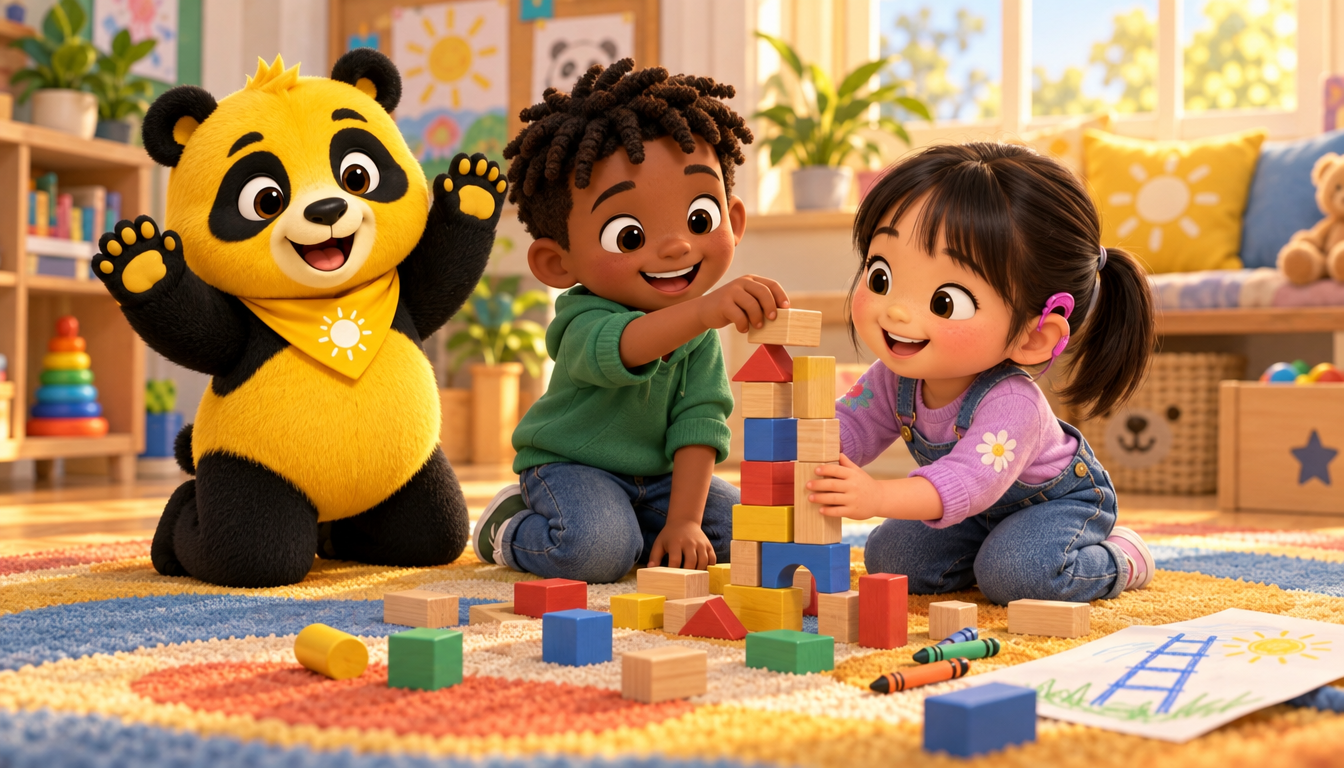
Quick takeaway: Kids who quit fast are usually tired, scared of mistakes or facing a task that feels too big. Here are 8 simple ways to build persistence, with exactly what to say.
To help a child who gives up easily, start with the feeling, not the task. Name the frustration, shrink the challenge into one small next step, and coach instead of rescuing. Then praise the trying, not the result, so your child learns that sticking with something feels good.
Most kids who quit fast are not lazy. They are usually tired, scared of getting it wrong, or facing a task that feels too big. A four-year-old who throws the puzzle piece is often saying, "I don't know what to do next, and that feels awful."
That's why persistence is less about willpower and more about practice. Zero to Three, a national early childhood organization, notes that easily frustrated children tend to get very upset the minute something doesn't go their way. Their advice is hopeful, too: parents can do a lot to help a child learn to cope.
Below are eight ways to build "stick-with-it" skills at home or in the classroom, with what to say and how to start today.
First, Figure Out Why Your Child Is Quitting
Before you change anything, watch for a few days. When does your child give up? The pattern tells you which tool to reach for.
- The task is too hard right now. Zipping a coat or writing a whole name may be one step past where they are.
- Fear of mistakes. Some kids would rather not try than try and be wrong. You may hear, "I'm bad at this."
- Tiredness or hunger. Giving up at 5 p.m. is different from giving up at 9 a.m.
- Someone always helps. If a grown-up usually finishes the job, quitting gets the job done.
Most children are a mix. That's okay. The steps below work for all of them.
1. Name the Feeling Before You Fix the Problem
A frustrated child can't think clearly. If you jump straight to "Just try again," it often bounces off. Naming the feeling first helps their body settle.
How to do it today (30 seconds, no materials):
- Get down to eye level and lower your voice.
- Say what you see: "You're really frustrated. Those blocks keep falling."
- Agree that it's hard: "This one IS tricky."
- Wait. Give them a few breaths before you offer any ideas.
You're not agreeing that they should quit. You're showing that big feelings are allowed, and that you're on their side.
2. Shrink the Task to One Next Step
"Clean your room" or "write your name" can feel like a mountain to a five-year-old. Breaking a task into smaller pieces is one of the simplest things you can do, and Zero to Three recommends it.
How to do it today (2 minutes):
- Pick the task your child just abandoned.
- Find the very next step. Not the whole job, just one piece: "Let's find all the edge pieces first."
- Celebrate that step, then name the next one.
When Diego got stuck tying his shoes, his dad stopped saying "tie your shoes." Instead he said, "Just make the bunny ear." One loop felt doable. The rest came later.
3. Be a Coach, Not a Rescuer
It's so tempting to just do it for them. It's faster, and the crying stops. But every rescue teaches a child that hard things are someone else's job.
Zero to Three suggests becoming your child's coach: help them think through solutions without doing the work for them.
How to do it today (what to say):
- "What could you try next?"
- "Remember last time? What worked then?"
- "Do you want a hint, or do you want to keep trying on your own?"
- "I'll hold the paper still. You do the cutting."
Let them own the win, even if it's a little wobbly.
4. Teach the Power of "Yet"
The word "yet" turns a dead end into a road. "I can't ride my bike" becomes "I can't ride my bike yet." It's tiny, but it changes the story a child tells about themselves.
How to do it today (1 minute, all day long):
- When you hear "I can't," add "yet" out loud with a smile.
- Use it for yourself, too: "I don't know how to fix this sink yet. I'm going to watch a video."
- At dinner, ask, "What's something you can't do yet, but you're working on?"
At Sunny's Clubhouse, we have a phrase for this. Sunny Says: "I'm still learning!" It's what Sunny tells himself when something doesn't work the first time. Teach your child to say it, and say it with them.
5. Praise the Trying, Not Just the Result
"You're so smart!" feels kind, but it can backfire. If being smart means getting it right, then getting it wrong feels like proof you're not smart. Kids who fear that will quit early to protect themselves.
Instead, notice the effort, the strategy and the not-quitting.
How to do it today (swap these phrases):
- Instead of "You're a natural!" try "You kept going even when it was hard."
- Instead of "Perfect!" try "You tried a new way when the first way didn't work."
- Instead of "Good job," try "You were frustrated, and you didn't quit. That's brave."
Be specific. Children believe praise more when it names exactly what they did.
6. Build a "Brave Break" Into Hard Tasks
Sometimes the best thing a stuck child can do is step away. A break is not quitting if you come back. Zero to Three suggests offering time away from a frustrating task, like a hug or a snuggle with a book, before returning to it.
How to do it today (5 minutes):
- Name it: "Let's take a Brave Break and come back in five minutes."
- Do something calming: a snack, a stretch, a slow breath or a quick song.
- Then return together: "Okay, Brave Break is over. Let's try one more time."
The coming back is the important part. Over time, your child learns that walking away for a minute is a tool, not an ending.
7. Let Your Child See You Struggle
Kids often think grown-ups just know how to do everything. Show them that's not true. When you hit a snag, talk through it out loud.
How to do it today (while you're doing something real):
- "Hmm, this recipe didn't turn out. I'm a little frustrated."
- "I'm going to take a breath and read the directions again."
- "I'll try it a different way tomorrow."
Keep it light and calm. Zero to Three suggests modeling how to stay calm and how to ask for help. They note that a little humor can help, too.
8. Play the "Try-Again Ladder" Game
This is a Sunny's Clubhouse activity that makes trying again something to celebrate.
How to do it today (10 minutes, paper and crayons):
- Draw a ladder with five rungs on a sheet of paper.
- Pick a skill your child is working on: hopping on one foot, a tricky puzzle, writing the letter S.
- Every time they try, even if it doesn't work, they color in one rung and say, "I'm still learning!"
- When they reach the top, celebrate the trying with a silly dance or a high five.
The ladder counts attempts, not successes. That's the point. Malik's family hung theirs on the fridge, and his little sister started making her own.
When to Ask for More Help
Every child gets frustrated, and giving up sometimes is part of being little. But if your child gives up on nearly everything, gets very upset many times a day, or seems unusually stuck in one area, like talking, moving or learning letters, talk with your pediatrician or your child's teacher. They can help you figure out whether something else is making tasks harder.
This Week's Shine Challenge
Pick one thing your child is still learning. Each day this week, try it together for just a few minutes. Every time someone makes a mistake, the whole family says, "I'm still learning!" and tries once more. Grown-ups count, too.
Questions Parents and Teachers Ask About Kids Who Give Up Easily
Why does my child give up so easily?
Most often, the task feels too hard, your child is tired or hungry, or they're afraid of making a mistake. Some children also have a temperament that gets frustrated faster. Watching when and where it happens usually points to the reason.
Should I make my child finish everything they start?
Not always. Pushing through every single task can turn learning into a battle. Aim for "one more try" or "one more step," then let them stop on a good note. That builds stamina without making them dread the activity.
Is it okay to help my child when they're frustrated?
Yes, as long as you help them think instead of doing it for them. Offer a hint, hold something steady, or ask what they might try next. Let your child take the final step so the win belongs to them.
What age do kids learn to stick with hard things?
Persistence grows slowly through the early school years. A four-year-old may only last a minute or two on something hard, while a seven-year-old can often go longer. Small, regular practice matters more than age.
What should I do if my child says "I'm bad at this"?
Don't argue or rush to reassure. Try, "It feels hard right now. You're still learning." Then point to one small thing they did well, and help them take one more step.
Get the Free Power of Kindness Pack
Want more ways to help your child feel brave and kind? Our free Power of Kindness Pack has simple activities and Sunny's encouraging words you can use at home or in class.
Further Reading
More on Confidence & Courage
Confidence & Courage
Perfectionism in 6-Year-Olds: 8 Gentle Ways to Help (and What to Say)
Crumpled drawings, tears over one wrong letter? Here's what perfectionism in 6-year-olds looks like, and 8 gentle ways to help your child make peace with mistakes.
Confidence & Courage
How to Teach Kids Patience and Delayed Gratification: 8 Simple Ways (Ages 4–8)
Waiting is a skill kids can practice. Here are 8 simple ways to teach patience and delayed gratification, with what to say, easy games and a Sunny seed activity.
Confidence & Courage
9 Books About Making Mistakes for Kindergarten (With Questions to Ask)
Nine picture books that help kindergartners see mistakes as part of learning, each with one question to ask and a quick activity to try today.
Get The Sunbeam Signal
Simple ideas, playful activities, and a little Sunny inspiration for helping children shine.
For adults only. This optional newsletter is separate from free Power Pack access. Unsubscribe anytime.