Confidence & Courage
9 Books About Making Mistakes for Kindergarten (With Questions to Ask)
By Audrey Bell-Kearney · · Updated
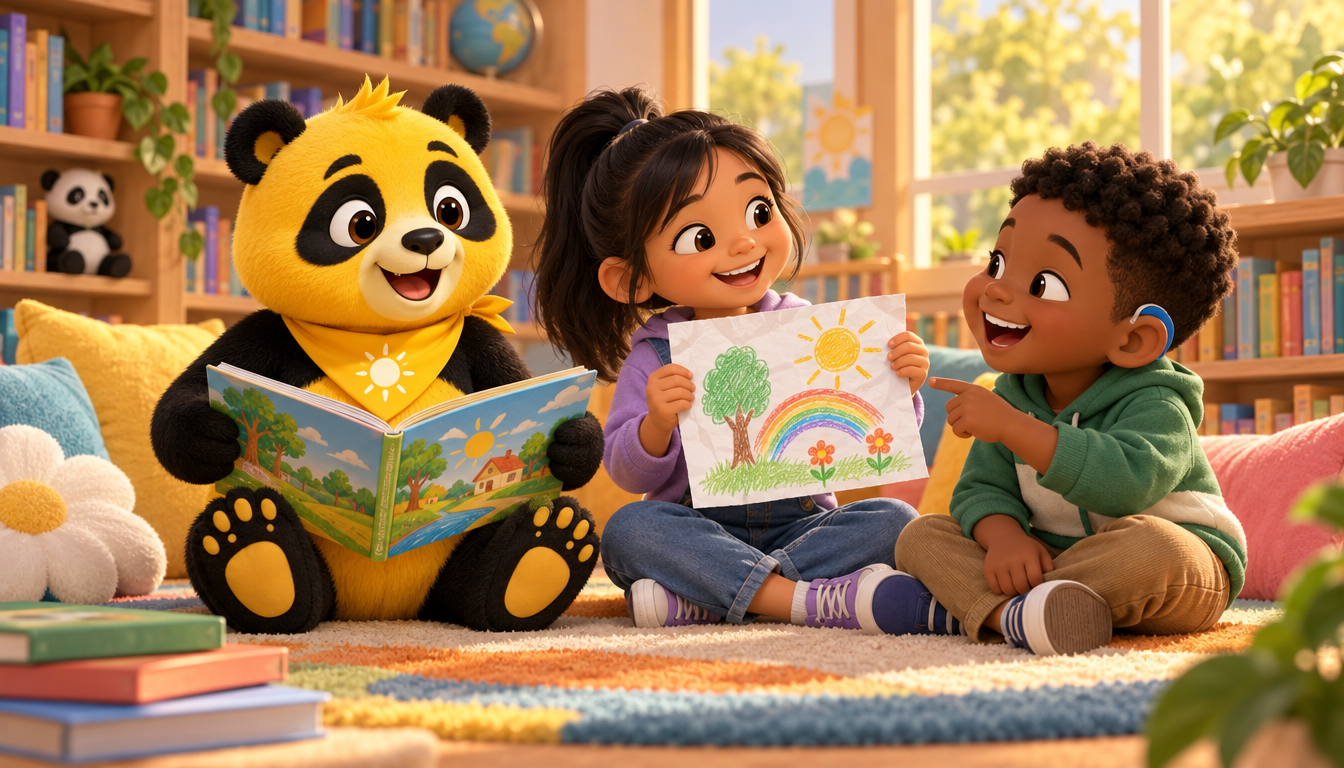
Quick takeaway: Nine picture books that help kindergartners see mistakes as part of learning, each with one question to ask and a quick activity to try today.
The best books about making mistakes for kindergarten show a character who messes up, feels frustrated, and finds a way forward. Great picks include *Beautiful Oops!*, *The Book of Mistakes*, *Ish*, *The Most Magnificent Thing* and *Jabari Tries*. Read one together, ask one simple question, and give your child a tiny chance to practice "oops" right away.
Kindergarten is a year full of firsts. Kids write their names, sound out words, cut on the line and try new games. That means a lot of wobbly letters and crooked cuts. For some children, one mistake can feel like proof that they "can't do it."
A good picture book gives kids a safe place to see that feeling from the outside. When a character tears the page, crashes the invention or crumples the drawing, your child gets to watch what happens next. At Sunny's Clubhouse, we think that "what happens next" is the whole lesson.
How We Chose These Books
Every book on this list is a good fit for ages 4–8 and works as a read-aloud in about 5–10 minutes. Each one shows a mistake as a normal part of learning, not a disaster. We also looked for a mix of stories: art, building, everyday slip-ups and big public goofs.
For each book you'll find what it's about, one question to ask, and a quick activity you can do today.
1. Beautiful Oops! by Barney Saltzberg
This interactive book is full of torn pages, spills and smudges. Each "oops" turns into something new when you lift a flap or look again. It is a perfect first book about mistakes for younger kindergartners.
Ask: "What could THIS oops turn into?"
Try it today (5 minutes): Put a splotch of paint or a scribble on a blank page. Hand it to your child and ask them to turn it into a creature, a plant or a vehicle.
2. The Book of Mistakes by Corinna Luyken
An artist makes one small mistake, then another. Instead of starting over, she keeps building on each mistake. Slowly, the page becomes something wonderful. The quiet text makes it a calm bedtime pick.
Ask: "Which mistake turned into your favorite part?"
Try it today (10 minutes): Draw a picture together where each person must add one "mistake" on purpose. Then take turns turning each one into something new.
3. It's Okay to Make Mistakes by Todd Parr
Todd Parr's bold colors and simple sentences make this one easy for early readers. It lists everyday mistakes, like mismatched socks or spills, and says they are part of learning. Kids love pointing out the ones they have made too.
Ask: "Which of these mistakes have YOU made?"
Try it today (3 minutes): Take turns sharing one silly mistake you made this week. Grown-ups go first.
4. Ish by Peter H. Reynolds
Ramon loves to draw until his big brother laughs at one of his pictures. He starts crumpling up every drawing that isn't "right." Then his little sister shows him that his drawings are "vase-ish" and "tree-ish," and that "ish" is wonderful.
Ask: "Can something be good even if it isn't perfect?"
Try it today (10 minutes): Draw "ish" pictures together, like a cat-ish cat or a house-ish house. Hang them up proudly.
5. The Most Magnificent Thing by Ashley Spires
A girl and her dog set out to build the most magnificent thing. It doesn't work. She tries again and again until she gets so mad she quits. A walk helps her calm down, and she sees the good parts of every try.
Ask: "What helped her feel calm enough to try again?"
Try it today (5 minutes): Talk about your family's "walk away and come back" plan. It could be a short walk, a drink of water or a few slow breaths.
6. Jabari Tries by Gaia Cornwall
Jabari is building a flying machine, and it keeps crashing. He gets frustrated. With encouragement from his dad and help from his little sister Nika, he keeps working at it. This story shows that big builders take breaks and team up.
Ask: "Who could you ask for help when something is hard?"
Try it today (15 minutes): Build a paper airplane together. If it nosedives, change one thing and fly it again.
7. Rosie Revere, Engineer by Andrea Beaty
Rosie loves inventing, but she hides her creations after someone laughs at one. When her great-great-aunt Rose wishes she could fly, Rosie builds a flying machine. It flops, and Rosie wants to give up. Her aunt helps her see that the flop was really a first step.
Ask: "What did Rosie learn from her flop?"
Try it today (10 minutes): Build a tower from cups, blocks or recycled boxes. When it falls, ask, "What will we change next time?"
8. The Girl Who Never Made Mistakes by Mark Pett and Gary Rubinstein
Beatrice is famous for never making mistakes. Then she makes a very big one in front of everyone. Her surprising reaction is to laugh, and she finds out life is more fun when she isn't worried about being perfect.
Ask: "How do you think Beatrice felt before she made her mistake? How about after?"
Try it today (5 minutes): Play a game where everyone tries something new and wobbly, like juggling two socks. Cheer for the drops.
9. The Magical Yet by Angela DiTerlizzi
A child struggling to ride a bike meets a magical creature called "the Yet." The rhyming story shows that "I can't do it" can become "I can't do it yet." Kids from many backgrounds appear throughout, learning all kinds of things.
Ask: "What is something you can't do yet?"
Try it today (2 minutes): Every time someone says "I can't," add a friendly "...yet!" Make it a family game this week.
How to Read These Books So the Lesson Sticks
Reading the book is a great start. What you do after the last page makes it stick.
Share your own mistakes. Harvard's Making Caring Common project suggests talking openly about mistakes you have made, how you handled them, and what you learned. When grown-ups go first, kids feel safer sharing too.
Change the story about mistakes. Mistakes still feel bad, and that's okay to say out loud. Then help your child notice what the mistake taught them. The goal is for kids to see mistakes as something to learn from, not something to hide.
Make it a habit. Talk about mistakes during everyday moments, like dinner or the car ride home. If your child can't think of one, share yours first.
Pick the right moment. These books work best when everyone is calm. If your child just had a meltdown over a mistake, comfort first. Save the book for later that day.
Sunny Says: "I'm still learning!" In our Sunny's Clubhouse episode "What If I Mess Up?", Sunny and DJ Bam Bam learn that mistakes are just practice. Teach your child to say "I'm still learning!" after any oops. It's short, it's true and it turns a stuck moment into a next step.
This Week's Shine Challenge
Start an "Oops Night." Pick one evening this week. After reading one of these books, each person shares one mistake they made and one thing it taught them. Grown-ups go first. Then everyone says together, "I'm still learning!"
Questions Parents and Teachers Ask About Books About Making Mistakes
What age are these books about mistakes best for?
Most of these books work well for ages 4–8. *Beautiful Oops!* and *It's Okay to Make Mistakes* are best for the younger end. *Rosie Revere, Engineer* and *The Girl Who Never Made Mistakes* have a bit more story and suit kindergarten through second grade.
Should I read a book about mistakes right after my child makes one?
Usually, it's better to wait. In the moment, your child needs comfort and calm, not a lesson. Read the book later that day or at bedtime, when your child can listen and connect the story to their own experience.
My child gets really upset over small mistakes. Will a book help?
Books can help kids see that everyone makes mistakes and that it's okay to feel frustrated. Pair the book with a calming routine, like a few slow breaths, and lots of practice with low-stakes "oops." If the frustration is frequent or intense, it's a good idea to talk with your pediatrician.
How can teachers use these books in the classroom?
Read one book each week during morning meeting or story time. Ask the "Ask" question from this list, then try the activity as a class. Some teachers keep a "Mistakes Wall" where students post a mistake and what they learned from it.
How often should we read the same book?
As often as your child asks. Young children love repetition, and each reread helps the message sink in. You might notice your child starting to say lines from the book when they make a mistake.
Get the Free Power of Kindness Pack
Want more ways to help your child feel brave and kind? Our free Power of Kindness Pack includes simple activities and Sunny printables you can use at home or in class.
Further Reading
More on Confidence & Courage
Get The Sunbeam Signal
Simple ideas, playful activities, and a little Sunny inspiration for helping children shine.
For adults only. This optional newsletter is separate from free Power Pack access. Unsubscribe anytime.