Classroom Activities
Needs vs Wants Activity for Kindergarten: 8 Fun, Hands-On Ideas
By Audrey Bell-Kearney · · Updated
Quick takeaway: Eight hands-on needs vs wants activities for kindergarten, from a picnic basket sort to a pretend grocery store, with what to say and tips for ages 4–8.
A needs vs wants activity for kindergarten helps children sort things into two groups: things we must have to stay healthy and safe, and things that are nice to have. The best ones are short, hands-on and full of real objects, like a snack, a coat or a toy car. Kids learn the idea fastest when they get to move, sort and talk about why.
A need is something we have to have to live and grow, like food, water, a home, clothes for the weather and people who care for us. A want is something that makes life more fun, like toys, treats or a new movie. Wants aren't bad. They just come after needs.
This matters early. PBS KIDS for Parents shares guidance from the Consumer Financial Protection Bureau that by about age 5, children can begin learning the difference between needs and wants, and how to wait for things they want. That's the foundation for saving, sharing and smart choices later.
Before You Start: Three Ground Rules
Most needs and wants worksheets stop at "sort the pictures." Here's what makes the lesson actually stick.
Wants are welcome. Don't make a child feel guilty for loving toys. Say, "Wanting things is normal. Grown-ups want things too."
Some things are "it depends." A coat is a need in a snowy January and a want on a summer beach. Shoes are a need. Light-up sparkle shoes are a want. These tricky items spark the best talks.
Be gentle about home. In any classroom, some families may be working hard to cover their needs. Never ask children to share what their family can or can't buy. Keep examples general, and use pretend shops and picture cards.
1. Sunny's Picnic Basket Sort
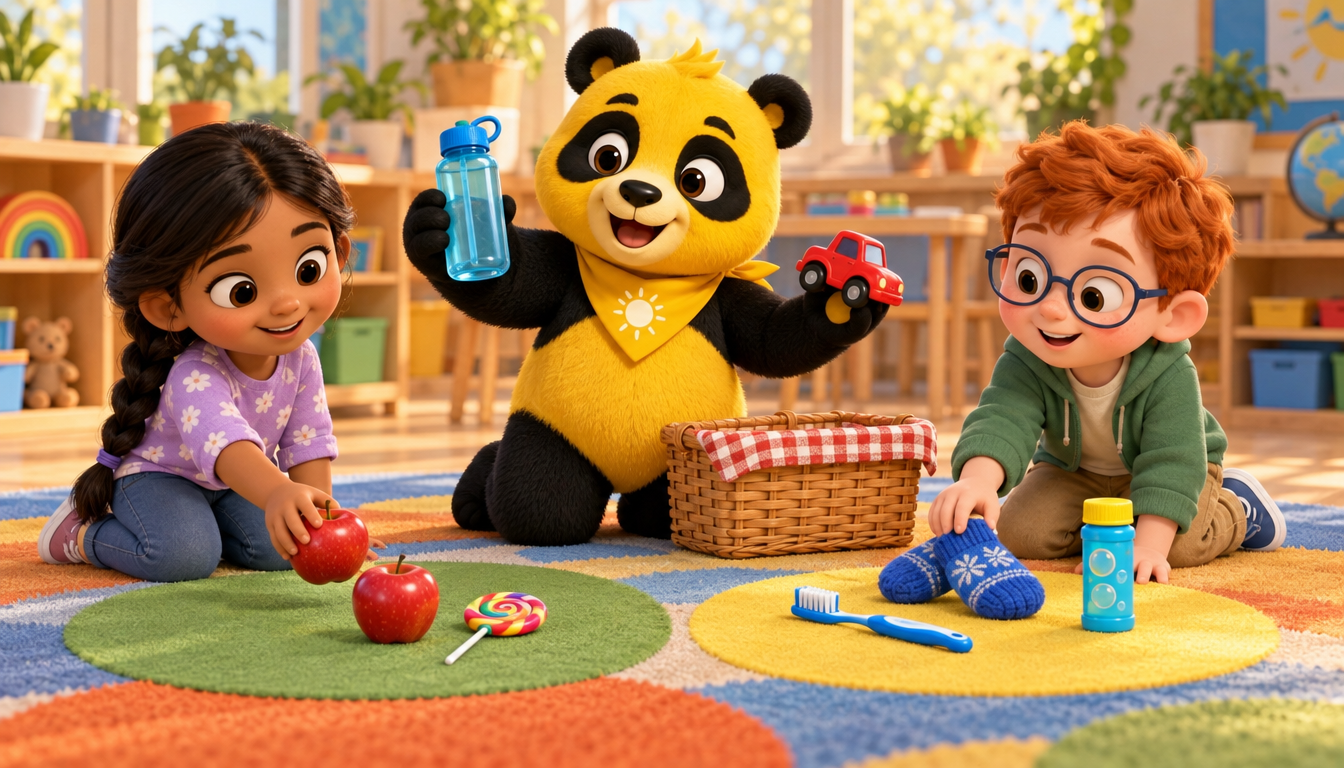
Time: 10 minutes. Materials: A basket or bag, and 8–10 real items or pictures (water bottle, apple, mitten, toothbrush, sticker sheet, toy car, lollipop, bubbles).
Tell children that Sunny the Panda is packing for a long day at the park. He can only carry what fits. Pull items out one at a time and ask, "Does Sunny need this to stay healthy and safe, or does he want it for fun?"
Make two piles on the floor. Put the "it depends" items in a third spot in the middle and talk about them last.
What to say: "Sunny needs water so his body stays strong. Does he need bubbles? No, but bubbles sure are fun! That's a want."
Sunny Says: "Needs go first. Wants can wait their turn!"
2. Run to the Right Side
Time: 10 minutes. Materials: Two signs, one with a heart-and-house picture for "Need" and one with a star for "Want."
Tape the signs on opposite sides of the room or yard. Call out an item, and children walk, hop or roll to the side they choose. Then ask two or three children to explain their choice.
This works well right after recess, when bodies need to move. Children who use a wheelchair or walker can point, roll or hold up a card instead of running.
What to say: "Ice cream! Where are you going? Tell me why."
3. The Tricky Middle Game
Time: 5–10 minutes. Materials: Picture cards of "it depends" items: umbrella, bike, sunglasses, sweater, backpack, birthday cake, glasses, a phone.
Hold up one card at a time. Ask, "When would this be a need? When would it be a want?" There's no wrong answer if the child can give a reason.
For example, Marisol might say glasses are a need because her big brother uses them to see the board. Jayden might say a bike is a want, but it could be a need for someone who rides it to work. That kind of thinking is exactly the goal.
What to say: "Ooh, good thinking. It depends on the weather, the place or the person, doesn't it?"
4. Pretend Grocery Store With Five Coins
Time: 15–20 minutes. Materials: Play food or empty, clean food boxes, price tags (1–3 coins each), and five pennies or paper coins per child.
Set up a little shop. Each child gets five coins and one job: buy what your pretend family needs for dinner first, then decide if anything is left for a want.
This adds the real-life twist kindergarteners love. PBS KIDS for Parents points out that buying one thing often means you can't buy another. Children feel that lesson when their last coin has to choose between cookies and milk.
What to say: "You have two coins left. What does your family need? Is there room for a treat today?"
5. Needs and Wants Collage
Time: 15 minutes. Materials: Old store flyers or magazines, scissors, glue, and a paper folded in half.
Children label one side "Need" with a house drawing and the other side "Want" with a star. They cut out pictures and glue them to the right side.
Kids who aren't cutting yet can tear pictures or point while a grown-up cuts. When the collage is done, ask each child to share one need and one favorite want.
What to say: "Tell me about your want side. Which one would you save up for?"
6. The Waiting Jar
Time: 5 minutes to set up, then a few weeks. Materials: A clear jar, a picture of one small "want," and coins or stickers.
Pick one small want as a class or family, like a new ball for recess or a special bedtime book. Tape its picture on a jar. Add a coin or sticker each time children help, wait patiently or finish a job.
Watching the jar fill up teaches the second half of the lesson: wants are often worth waiting for. When the jar is full, celebrate the want together.
What to say: "We didn't get it right away. We waited and worked together. How does it feel now?"
7. "Need or Want?" Car and Store Game
Time: 2 minutes, anytime. Materials: None.
Take the activity into real life. In the car, at the store or during dinner, ask one quick question: "Is milk a need or a want?" "What about a balloon?"
Let your child quiz you, too. Kids love catching a grown-up. If you say "coffee is a need," expect giggles and a good debate.
What to say: "You be the teacher. Ask me a tricky one!"
8. Sunny's Clubhouse Watch and Talk
Time: 5 minutes. Materials: A short Sunny's Clubhouse video from Watch, or a favorite picture book about shopping or saving.
After watching or reading, ask one question: "Did anyone in the story want something? Did they need it?" Story characters make it easy to talk about choices without anyone feeling put on the spot.
What to say: "What would YOU have done? Would you wait, or buy it now?"
Adapting the Activity for Ages 4–8
Ages 4–5: Stick to clear examples, like water, apple, toy and candy. Use real objects instead of pictures, and keep it to five or six items.
Ages 6–7: Add the "it depends" cards and the pretend store. Ask children to explain their thinking in a full sentence.
Ages 7–8: Add simple budgets, like ten coins and four needs. Talk about choices that help others, too, like sharing coins with a food drive.
This Week's Shine Challenge
Play "Need or Want?" once a day this week, at home or in class. On the last day, let your child pick one small want and make a plan to wait or save for it. Celebrate the waiting, not just the getting!
Questions Parents and Teachers Ask About Needs vs Wants Activities
What age should kids learn needs vs wants?
Many children can start around age 4 or 5 with simple, clear examples. PBS KIDS for Parents shares guidance that by about age 5, kids can begin learning the difference. By ages 6 to 8, they can handle "it depends" items and simple choices with coins.
How do you explain needs vs wants to a 5-year-old?
Keep it short and concrete. Say, "A need is something your body has to have to be healthy and safe. A want is something fun that's nice to have." Then hold up real things and sort them together.
Is love a need or a want?
Love and care are needs. Children need safe, caring people to grow. Including love, safety and rest shows kids that not every need can be bought in a store.
What if my child says everything is a need?
That's very normal at this age, especially for a favorite toy. Stay curious instead of correcting fast: "What would happen if you didn't have it today?" Over time, children begin to notice the difference on their own.
How can I teach needs vs wants without making kids feel bad about wanting things?
Say out loud that wanting things is normal and fun. Share your own wants, too. The goal isn't to stop wanting. It's learning that needs come first, and that waiting can make a want feel even better.
Get the Free Power of Kindness Pack
Want more simple, screen-free ways to build patience, kindness and confidence? Our free Power of Kindness Pack is full of Sunny's Clubhouse activities for home or class.
Further Reading
More on Classroom Activities
Get The Sunbeam Signal
Simple ideas, playful activities, and a little Sunny inspiration for helping children shine.
For adults only. This optional newsletter is separate from free Power Pack access. Unsubscribe anytime.