Classroom Activities
9 Thanksgiving Gratitude Activities for Kindergarten (Beyond the Handprint Turkey)
By Audrey Bell-Kearney · · Updated
Quick takeaway: Nine short, hands-on Thanksgiving gratitude activities for kindergarten, with time needed, materials and exactly what to say. No writing required.
The best Thanksgiving gratitude activities for kindergarten are short, hands-on and about people, not just stuff. Five-year-olds learn thankfulness by spotting good things, naming who made them happen and doing something kind in return. The nine ideas below take 5 to 20 minutes each and work in a classroom or at the kitchen table.
Most Thanksgiving lists for kindergarten are full of handprint turkeys and coloring pages. Those are fun, but a craft alone doesn't teach a child what gratitude feels like. The ideas here keep the fun and add the part that sticks: a simple question, a real person to thank and a small action.
Every activity includes the time it takes, what you need and exactly what to say. None of them require kids to write. Children who are writing can add words, and children who aren't can draw, point or tell a grown-up.
Why Kindergartners Need More Than "Say Thank You"
Young children can say "thank you" long before they understand it. Real gratitude grows when a child notices that someone *chose* to do something kind for them.
The Greater Good Science Center at UC Berkeley describes a study in which children ages 8 to 11 learned to notice three things: someone helped them on purpose, helping took effort, and the help mattered to them. After a week of short daily lessons, those kids wrote 80 percent more thank-you notes than kids who didn't get the lessons.
Kindergartners are younger, so we keep it even simpler. At Sunny's Clubhouse, we boil it down to three tiny steps.
Sunny Says: "Spot it. Say it. Share it." Spot something good. Say who helped. Share a thank-you.
1. The Thankful Pumpkin Circle
Time: 5 minutes. You need: a small pumpkin or gourd.
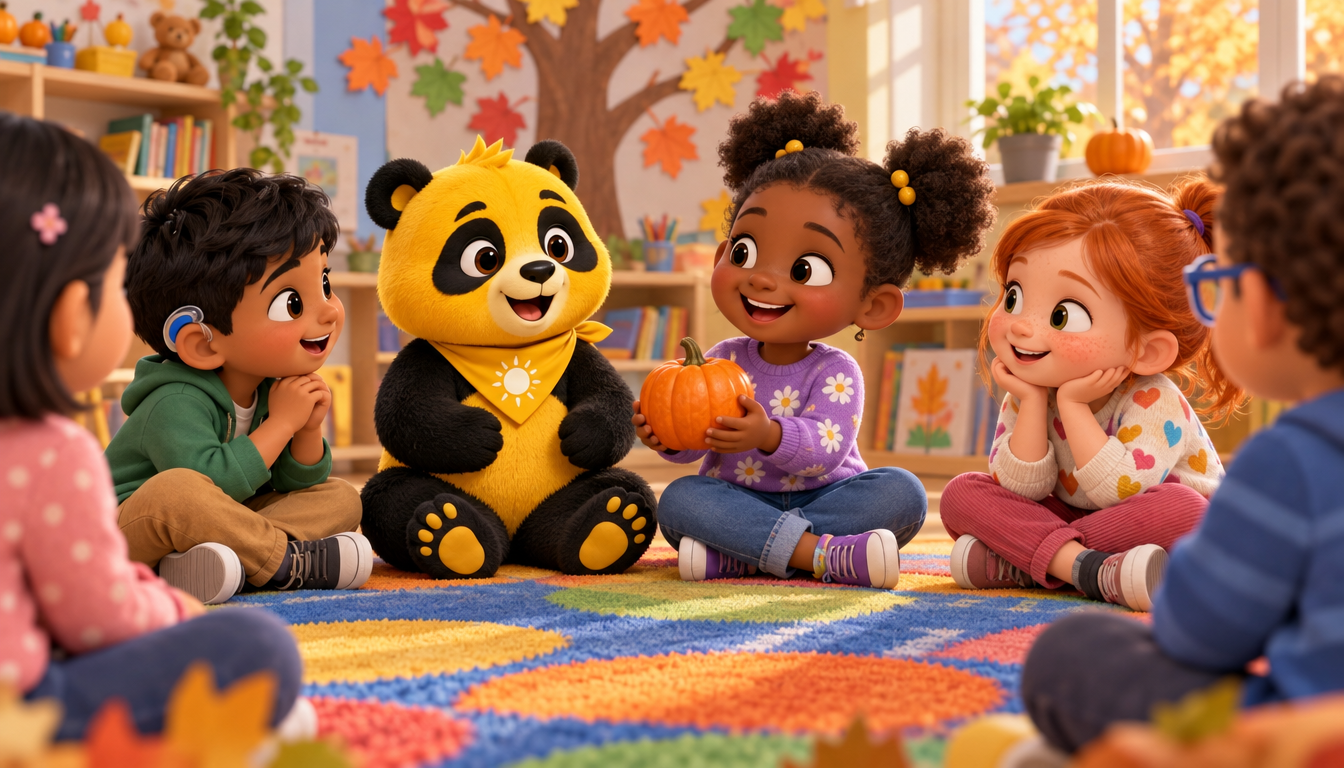
Sit in a circle for morning meeting or before dinner. Whoever holds the pumpkin shares one thing they're thankful for today. Then they pass it to the next person.
What to say: "When the pumpkin comes to you, tell us one good thing. If you need more time, you can say 'pass' and we'll come back to you."
The "pass" rule matters. Kids who feel put on the spot often freeze or say "nothing." Going last gives them time to hear ideas and find their own.
2. The Helper Tree
Time: 15 minutes, then 2 minutes a day. You need: a paper tree trunk on the wall or fridge, and paper leaves.
This is a twist on the classic thankful tree. Each leaf names a *person* and what they did. "Ms. Lopez helped me zip my coat." "Dad made pancakes."
What to say: "Who did something nice for you today? What did they do?"
Pre-writers draw the helper, and a grown-up writes the words underneath. By Thanksgiving, the tree is covered with people, not just toys. That shift is the whole point.
3. The Thank-You Parade
Time: 20 minutes. You need: paper, crayons and a hallway.
Make a list of school helpers kids rarely thank: the custodian, cafeteria staff, the bus driver, the crossing guard, the school nurse, the front office. Each child draws a thank-you picture for one helper.
Then line up and deliver them in a "parade." Kids hand over their picture and say one sentence together: "Thank you for helping our school!"
At home, the parade can visit a neighbor, the mail carrier or a grandparent by video call. Watching a grown-up light up is the lesson kids remember most.
4. "I Spy Something Good" Walk
Time: 10 minutes. You need: nothing.
Take a short walk around the playground, the classroom or the block. The mission is to find five things to be thankful for. Kids hold up a finger for each one they spot.
What to say: "I spy something good... that keeps us warm." (A coat. The sun. The heater.) Then let kids give the clues.
This builds the first gratitude skill: noticing. A child who can spot good things on a walk will start spotting them everywhere.
5. The Thank-You Chain
Time: 15 minutes. You need: strips of paper, tape and one food item, like an apple.
Hold up an apple. Ask, "Who helped get this apple to our classroom?" Each answer becomes a paper link: a farmer, the rain, a truck driver, the grocery store worker, the person who packed the snack.
What to say: "Wow. One apple, and look how many people helped!"
Connect the links into a chain and hang it up. Kindergartners love seeing a long chain grow, and it makes invisible helpers visible. If you share the apple afterward, check your class allergy list first.
6. Thankful for Me Mirror Time
Time: 5 minutes. You need: a hand mirror, or no mirror at all.
Gratitude isn't only about other people. Kids can be thankful for their own bodies, skills and kind hearts too.
Pass a mirror around, or have kids pretend. Each child finishes the sentence: "I'm thankful my body can..." (jump, hug, sing, build). For a second round, try: "I'm thankful I'm good at..."
This quietly builds confidence, which fits right in with Sunny's message that every child was born to shine.
7. The Gratitude Echo Chant
Time: 3 minutes. You need: your voice and maybe a drum or table to tap.
In the spirit of DJ Bam Bam, turn thanks into a beat. The leader says a line and the class echoes it back:
*"Spot something good!"* (Echo.) *"Say who it's from!"* (Echo.) *"Share a thank-you!"* (Echo.) *"Now everyone—thank you!"* (Everyone together.)
Use it as a transition between activities or to start the day. Short rhythmic chants are easy for 4- and 5-year-olds to remember and repeat at home.
8. Thankful Place Mats for the Big Meal
Time: 20 minutes. You need: large paper, crayons and clear contact paper (optional).
Each child decorates a place mat for their own Thanksgiving table. In the middle, they draw one person they're thankful for and why. A grown-up can write the words.
Send them home before the break. Families get a ready-made conversation starter: "Tell me about your picture." Kids get to share their gratitude with the people they love most.
9. Our Class Thankful Book
Time: 15 minutes, plus 5 to assemble. You need: one sheet of paper per child, and a stapler or binder rings.
Each child makes one page that starts with: "I am thankful for..." Bind the pages into a class book and read it together the day before break.
Let the book go home with a different child each night. Families love seeing what classmates are thankful for. Teachers can also invite families to add a page of their own.
This Week's Shine Challenge
Thank one school helper by name before Thanksgiving break. It could be the custodian, the bus driver, a cafeteria worker or the crossing guard. Practice the words together first: "Thank you, Mr. Johnson, for keeping our school clean!"
Then ask your child or class afterward: "How did they look when you thanked them?" That moment is gratitude coming full circle.
Questions Parents and Teachers Ask About Thanksgiving Gratitude Activities
How do you explain gratitude to a kindergartner?
Keep it short and concrete: "Gratitude is when you notice something good and feel glad someone helped make it happen." Then give an example from their day, like a friend sharing crayons. Kindergartners understand feelings best through real moments, not definitions.
What if my kindergartner only says they're thankful for toys?
That's normal for this age, so don't correct it. Accept the answer, then add one question: "Who gave you that toy?" or "Who plays it with you?" Over time, that gentle follow-up helps kids notice the people behind the things they love.
How long should gratitude activities be for 5-year-olds?
Most kindergartners do best with 5 to 15 minutes. Short, repeated practice works better than one long lesson. A two-minute pumpkin circle every morning teaches more than an hour-long gratitude project once a year.
Can I do these activities at home instead of in a classroom?
Yes. Every activity on this list works with one child or a few siblings. Swap the classroom for your kitchen table, the school helpers for neighbors and relatives, and the class book for a family book.
What if a child says they have nothing to be thankful for?
Don't push or lecture. Make the question smaller: "What's one thing that made you smile today?" You can also share your own answer first. If a child seems sad often, gently check in with them and their family.
Get the Free Power of Kindness Pack
Want more easy ways to grow kindness and gratitude this season? Our free Power of Kindness Pack has simple activities, Shine Challenges and more from Sunny's Clubhouse.
Further Reading
Get The Sunbeam Signal
Simple ideas, playful activities, and a little Sunny inspiration for helping children shine.
For adults only. This optional newsletter is separate from free Power Pack access. Unsubscribe anytime.