Big Feelings
How to Teach a 4-Year-Old About Feelings: 7 Simple, Playful Ways
By Audrey Bell-Kearney ·
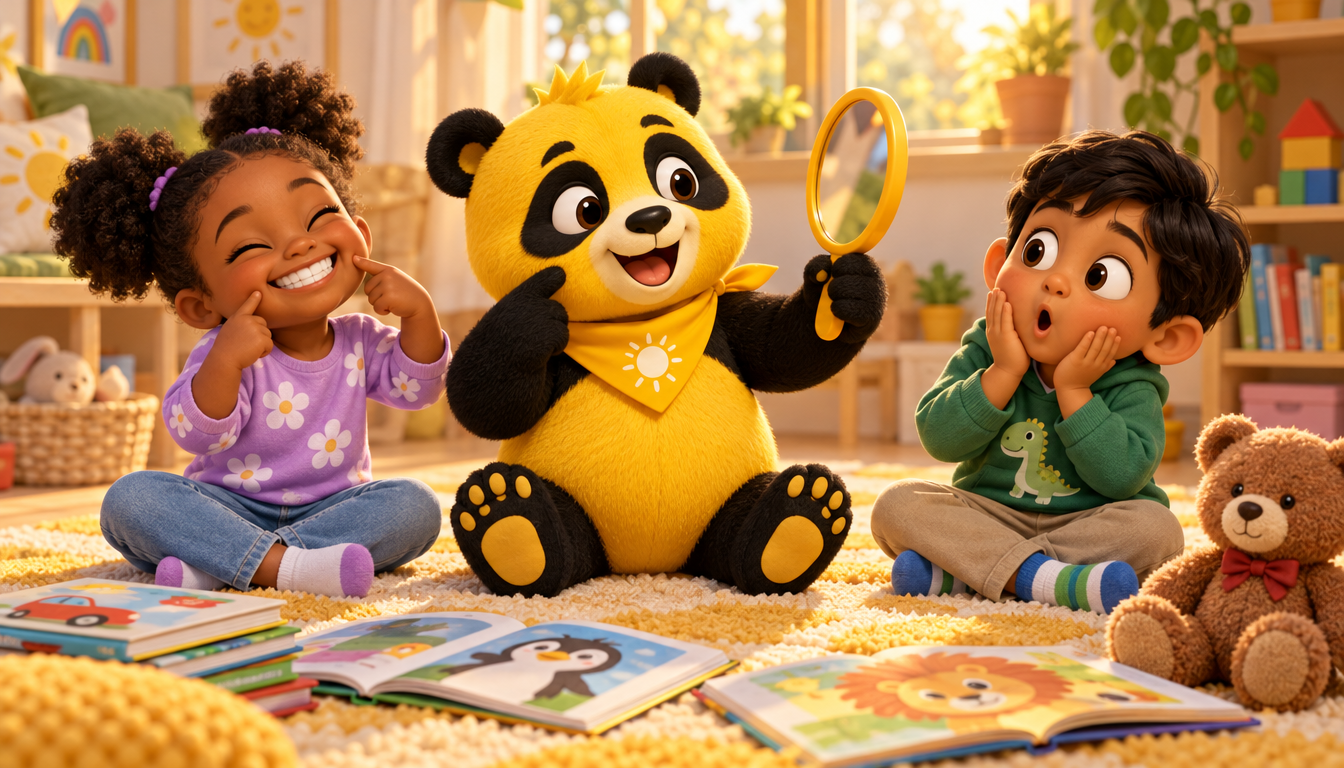
Quick takeaway: Name feelings out loud, find them in the body, and practice through play. Seven easy ways to grow your 4-year-old's feelings words, with what to say.
To teach a 4-year-old about feelings, name feelings out loud as they happen, connect each feeling to what caused it, and practice through play when everyone is calm. Start with a few simple words like happy, sad, mad and scared. Then slowly add new ones, like frustrated, proud and nervous.
Four-year-olds are ready for this. Most can name basic feelings, and they are starting to notice that certain events cause certain feelings. "My tower fell, so I'm mad." That link is the big skill you are building.
The goal is not a child who never cries or stomps. The goal is a child who can say, "I feel mad," instead of only showing it. Words give feelings a handle. And a feeling with a handle is much easier to carry.
What Feelings Look Like at Age 4
At this age, feelings are fast and big. A 4-year-old can go from giggling to sobbing in under a minute. That is normal.
Here is what many 4-year-olds can usually do:
- Name a handful of feelings, especially happy, sad, mad and scared.
- Guess how a character in a book feels from their face.
- Tell you why they feel something, at least some of the time.
- Start to use a simple calm-down step with help.
What they usually can't do yet is name a feeling while they're in the middle of it. That's why most of the teaching happens before and after the storm, not during it.
1. Narrate Feelings All Day Long
Time needed: A few seconds, many times a day Materials: None
Be your child's feelings sportscaster. When you see a feeling, say it out loud in a calm, curious voice.
What to say:
- "You're smiling so big. You look happy that Grandma is here."
- "Your face got scrunchy when the puzzle piece didn't fit. Are you frustrated?"
- "You hugged your bunny tight when the thunder boomed. Thunder can feel scary."
Use a guess, not a verdict. "Are you frustrated?" lets your child say, "No, I'm MAD!" That's a win. They just named a feeling.
Try it today: Name three feelings before dinner. Yours count too.
2. Name Your Own Feelings, and What You Do Next
Time needed: 30 seconds Materials: None
Children learn feelings by watching the grown-ups around them. When you name your own feelings, you show that everyone has them. Then you show what to do with them.
What to say:
- "I feel frustrated. The car won't start. I'm going to take three slow breaths."
- "I feel a little nervous about my meeting. I'm going to think about something that helps."
- "I felt grumpy this morning. Now I feel better after our walk."
Keep it short and calm. You don't need to share grown-up worries. Just the feeling word and one healthy next step.
Try it today: Catch yourself in one small feeling and say it out loud, with your next step.
3. Play Feelings Faces in the Mirror
Time needed: 5 minutes Materials: A mirror (a bathroom mirror works)
Stand side by side at a mirror. Call out a feeling and make that face together. Then look closely.
What to say:
- "Show me happy! What do your eyes do?"
- "Now show me surprised. Whoa, your eyebrows went way up!"
- "What does a sad mouth look like?"
Then switch roles. Let your child call out a feeling for you to make. Four-year-olds love being the boss of this game. Add silly ones, like "sleepy" or "silly," to keep the giggles going.
Try it today: Play three rounds while brushing teeth.
4. Find Feelings in Your Body
Time needed: 5 minutes Materials: None, or paper and crayons
This is the step many feelings guides skip. Feelings don't just live in words. They live in the body. Teaching a child where they feel a feeling gives them an early warning signal.
What to say:
- "When you feel mad, what happens in your hands? Do they want to squeeze?"
- "When you feel nervous, does your tummy feel funny or fluttery?"
- "When you feel happy, does your body want to bounce?"
For a creative twist, trace your child's body on a big sheet of paper (or draw a simple outline). Let them color where each feeling shows up. Red fists for mad. Blue tummy for sad. Yellow everywhere for happy.
Try it today: Ask, "Where do you feel happy in your body?" at bath time.
5. Use Books and Stuffed Animals as Feelings Helpers
Time needed: 10 minutes Materials: Any picture book, a favorite stuffed animal
It's easier to talk about a bunny's feelings than your own. Books and toys give children a safe distance.
While reading, pause and point at a character's face. Ask, "How do you think she feels? What made her feel that way?" Then ask, "What could help her?"
Stuffed animals work the same way. Maybe Teddy is sad because no one shared the blocks. Your child can comfort Teddy, find words for Teddy, and solve Teddy's problem. They are practicing for their own life.
Sunny Says: "Every feeling gets a name, and every name gets a hug." At Sunny's Clubhouse, we love this phrase because it teaches two things at once. Feelings are normal. And you don't have to handle them alone.
Try it today: At story time, stop twice to ask, "How does this character feel?"
6. Add One New Feelings Word Each Week
Time needed: A few minutes across the week Materials: Optional sticky note on the fridge
Once your child knows happy, sad, mad and scared, give them more words. A bigger feelings vocabulary helps a child say exactly what's going on. "I'm disappointed" is more useful than "I'm mad" when a playdate gets canceled.
Good words to add at age 4:
- Frustrated – when something is hard and won't work
- Proud – when you did something hard
- Nervous – when something new is coming
- Disappointed – when you hoped for something that didn't happen
- Lonely – when you want someone to be with you
- Calm – when your body feels slow and quiet
Choose a "Feeling of the Week." Use it often. Point it out in books, at the store, and in yourself. By Friday, your child may surprise you by using it.
Try it today: Pick "proud" this week. Notice one proud moment every day.
7. Do a Feelings Check-In at the Same Time Every Day
Time needed: 2 minutes Materials: None
Routines make feelings talk feel normal. Pick one moment each day, like dinner, the car ride home, or bedtime.
What to ask:
- "What made you feel happy today?"
- "Was there a sad or hard part?"
- "What feeling do you want to bring with you tomorrow?"
Some kids answer in one word. That's okay. Others want to tell you everything. That's okay too. What matters is that your child learns feelings are something your family talks about.
Try it today: Ask the three questions at bedtime tonight.
When the Big Feelings Hit
Teaching feelings happens mostly in calm moments. But what about the meltdown in the cereal aisle?
First, keep everyone safe and help your child calm down. Name the feeling once, simply: "You're really mad." Wait to talk or problem-solve until you're both calm. Then try, "That was a big mad feeling. What could we do next time?"
Remind your child that all feelings are okay, but not all actions are. "You can feel mad. You can't hit. You can squeeze this pillow or stomp your feet."
For ideas on calming the body, try our animal breathing exercises for kids. If your child's big feelings seem frequent, very intense, or are getting in the way of daily life, talk with your pediatrician.
This Week's Shine Challenge
Feelings Detective: Once a day, look for a feeling together, in a book, at the park, or in the family. Have your child name it and guess what caused it. "That boy is laughing. I think he's happy because he's on the swing!" At the end of the week, ask your child to name their favorite feeling they spotted.
Questions Parents and Teachers Ask About Teaching Feelings to 4-Year-Olds
How many feelings should a 4-year-old know?
There's no exact number to aim for. Most 4-year-olds can name a few basic feelings, like happy, sad, mad and scared. From there, add one new word at a time, like frustrated, proud or nervous. Steady practice matters more than a long list.
What should I do if my child says "I don't know" when I ask how they feel?
That's very common at this age. Offer two choices instead: "Do you feel sad or mad?" You can also share what you notice: "Your shoulders look droopy. I wonder if you feel sad." Over time, choices help your child find their own words.
Is it okay to tell my child not to cry?
It's better to accept the feeling and guide the behavior. Try "It's okay to feel sad. I'm right here," instead of "Don't cry." Feeling accepted often helps a child settle. It also teaches them that feelings are safe to share.
How can teachers teach feelings in a preschool classroom?
Use a short feelings check-in at morning circle. Read books and pause to talk about characters' faces. Mirror games and "Feeling of the Week" words work well for groups too. Keep it playful and quick, about five minutes at a time.
Should I name feelings during a tantrum?
Name it once, briefly, and calmly: "You're very mad right now." Then focus on safety and calming down. Save the longer feelings talk for later, when your child can listen and think again.
Get the Free Power of Kindness Pack
Want more easy ways to grow kind, confident kids? Our free pack is full of Sunny-approved activities for home and the classroom.
Further Reading
More on Big Feelings
Big Feelings
My 5-Year-Old Cries Over Everything: 8 Calm Ways to Help (and What to Say)
Does your 5-year-old cry over everything? Here are eight calm, practical ways to help, with exact words to use in the moment and a simple Rain Cloud Check.

Big Feelings
How to Help a 5-Year-Old With Big Emotions: 7 Calm, Simple Steps
Big feelings are normal at five. Here's how to calm the meltdown, name the feeling, set kind limits and build calm-down skills your child can use next time.
Big Feelings
How to Explain Worry to a Child: 7 Simple Ways (Ages 4–8)
Worry is a little alarm in the brain that sometimes beeps too loud. Here are seven simple ways to explain worry to kids ages 4–8, with words to say and quick activities.
Get The Sunbeam Signal
Simple ideas, playful activities, and a little Sunny inspiration for helping children shine.
For adults only. This optional newsletter is separate from free Power Pack access. Unsubscribe anytime.